
메뉴
메뉴
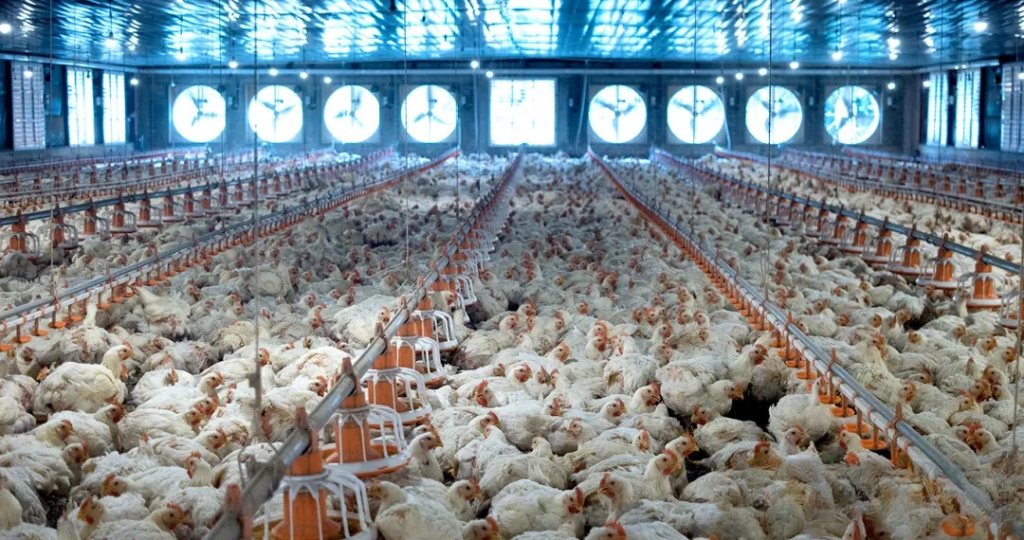
Most producers who start shopping for automatic poultry farm equipment are not chasing technology for its own sake. They are reacting to three numbers that stopped working: labour that keeps getting more expensive and harder to hire, feed that takes the largest share of production cost, and bird performance that shifts depending on who was on shift that morning.
Automation, done properly, does not remove people from the farm. It removes variation. The feeding round that ran forty minutes late. The inlet that stayed closed through a cold night. The drinker line nobody flushed for three weeks. Small inconsistencies like these are where most of the lost margin hides.
This guide breaks the category down into the systems that actually matter, how to match them to your house and your bird, and what to pin down with a supplier before you sign anything.
The phrase gets used for everything from a single pan feeder to a complete turnkey house. In practice a working package contains seven subsystems:
Buying these from five different vendors is where projects go wrong. The feeding line that does not quite fit the cage tier spacing, the controller that cannot talk to the fans, the manure belt width that mismatches the cage frame — these are integration problems, not equipment problems.
Big Herdsman, based in Qingdao, China, has been building livestock and poultry equipment since 2005 and supplies the full chain described above: cage systems, feeding and drinking lines, climate control, egg collection and manure handling, plus the control and monitoring layer that ties them together.
Two points matter for overseas buyers. First, equipment is configured against the local environment rather than shipped as a fixed package — house design, ventilation capacity and cooling area are calculated for the actual site climate. Second, projects have been delivered in more than 100 countries across Asia, the Middle East, Africa and Latin America, so the engineering team works regularly with different building standards, power conditions and management habits.
The Smart Farm Net monitoring platform is optional rather than mandatory. If your operation is not ready for data-driven management, the mechanical systems still run standalone.
Is automatic poultry equipment worthwhile on a mid-size farm? Usually yes, though the return comes from different places depending on scale. On smaller houses, labour reduction is the main gain. On larger ones, consistency — feed conversion, uniformity, mortality — tends to matter more.
How much labour does automation save? It depends on how many houses share one crew and how far you take automation. A practical exercise is to cost each manual task separately — feeding, water line flushing, manure removal, egg gathering — and automate the two that consume the most hours first.
Can an existing house be retrofitted? Often yes, provided the structure has adequate clear height and a sound floor. Measuring the house first is the only way to know; most suppliers will produce a layout proposal from your drawings.
What should I ask about after-sales? Which spare parts are stocked locally, what the warranty covers in writing, and whether commissioning and operator training are included in the quote.
Automatic poultry farm equipment is a decision measured in years, not a purchase order. The farms that get it right start with the house, the climate and the bird, and only then open a catalogue.
If you are planning a new house or upgrading an existing one, the engineering team can work from your drawings and local climate data through to a full equipment layout and quotation. Browse the poultry farm equipment range first, or contact Big Herdsman to start the conversation.
 English English
 Spanish
 French
 Russian
 Portuguese
 Arabic
 Chinese
 German
 Italian
 Japanese
 Korean
 Turkish
 Vietnamese
 Thai
 Dutch
 Polish
 Indonesian
 Hindi
 Bengali
 Urdu