
菜单
菜单
Egg breakage, slow manual collection, dirty eggs, and rising labor costs can quietly reduce the profit of a layer farm. For commercial egg production, a well-designed 内部鸡蛋收集 system helps move eggs smoothly inside the poultry house before they reach central collection, grading, or packing.
In-house egg collection is the process of moving eggs from cages or nests to collection points inside the poultry house using belts, conveyors, elevators, or collection tables. It helps poultry farms reduce manual handling, lower egg breakage, improve hygiene, and increase daily collection efficiency.
In-house egg collection refers to the egg handling process that happens inside the poultry house. After hens lay eggs, the eggs move from cages or nests onto egg belts or collection lines. From there, they can be transferred to a manual collection table, elevator collection unit, central egg collection system, or egg conveyor.
For commercial farms, this system is much more than a belt. It is part of the full egg production workflow. A good system should match the cage layout, poultry house length, bird capacity, collection frequency, and future automation plan.
大牧人 鸡蛋收集系统 is designed for efficient, hygienic, and damage-reducing egg handling, with options such as manual collection, single-hole automatic nests, and group automatic nests.
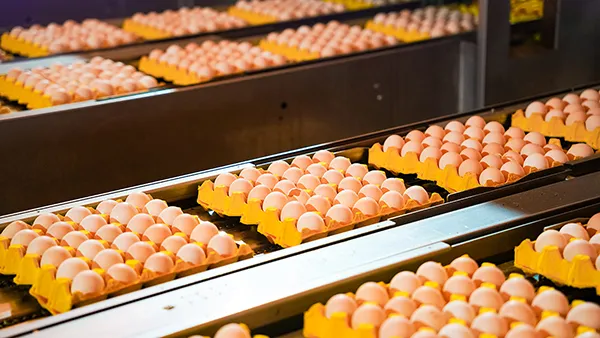
In small farms, workers may collect eggs by hand. But when a farm grows, manual egg collection becomes slower, more expensive, and less consistent. Eggs may stay longer in cages or nests, increasing the risk of cracks, dirt, and handling loss.
A modern in-house egg collection system helps farms solve several problems:
| 农场挑战 | 系统效益 |
|---|---|
| 劳动力需求旺盛 | Reduces repeated manual egg picking |
| 鸡蛋破碎 | Moves eggs more gently and consistently |
| 脏鸡蛋 | Reduces unnecessary contact and house exposure |
| 慢速收集 | Speeds up daily egg movement |
| Uneven workflow | Creates a more predictable collection process |
| Farm expansion | Supports larger cage rows and higher egg output |
For farms planning new layer houses, 鸡蛋生产设备 should be designed as a connected system, not as separate machines.
A practical egg collection system may include several parts. The exact configuration depends on the poultry house design and automation level.
Common components include:
Big Herdsman’s egg collection product information highlights functional modules such as egg buffering devices, egg collection belts, sprocket boxes, elevator collection systems, and manual collection tables. These modules help provide efficient, reliable, and low-breakage solutions for different farm needs.
对于规模较大的农场来说, 鸡蛋输送机 can connect poultry houses with collection or packing areas and support high-capacity egg movement.
The layer cage layout strongly affects egg collection performance. If the cage slope, belt position, aisle width, and collection route are not matched, eggs may not move smoothly.
现代 层笼系统 should be planned together with egg collection, feeding, drinking, manure removal, and climate control. Big Herdsman’s layer cage page highlights automated egg collection, efficient manure cleaning, and climate control for healthier egg production environments.
When designing the system, farms should consider:
| Design Point | 为何这很重要 |
|---|---|
| Cage row length | Affects belt length and collection timing |
| 笼子层数 | Affects elevator or transfer design |
| Egg belt position | Affects rolling stability and handling safety |
| Collection aisle | Affects worker access and inspection |
| Central collection route | Affects labor and workflow |
| 未来扩张 | Helps avoid redesign later |
A good in-house egg collection plan starts with the poultry house layout, not after the cage system is already installed.
Manual egg collection is simple and low-cost at the beginning. It may suit small farms or farms with lower egg volume. But as production grows, manual collection becomes harder to control.
Automatic in-house egg collection uses belts, conveyors, and transfer equipment to move eggs more consistently. It reduces the need for workers to walk through the house repeatedly and handle eggs by hand.
| 因子 | 人工收集 | 自动收款 |
|---|---|---|
| Initial cost | 较低 | 更高 |
| 劳动力需求 | 高 | 较低 |
| 鸡蛋处理 | More manual contact | Less manual contact |
| 破损控制 | 取决于工人 | More consistent |
| Suitable farm size | Small or simple farms | Medium and large farms |
| Long-term efficiency | 有限的 | Stronger |
For B2B buyers, the decision should not be based only on equipment price. The real question is how much labor, egg loss, and management time the system can save over several years.
An egg conveyor plays a key role when farms need to move eggs over longer distances or connect multiple cage rows to a collection point. It helps eggs travel smoothly and reduces repeated manual transfer.
Big Herdsman’s egg conveyor is described as a high-speed system with smooth, low-breakage egg transport. The product page states that the system can collect up to 65,000 eggs per hour and uses rust-resistant aluminum alloy frames with high-strength manganese steel chains.
An in-house system works best when the egg conveyor is selected according to cage layout, house length, collection direction, and packing workflow.
Breeder farms require even more careful egg handling because fertilized eggs are more valuable than ordinary table eggs. Cracks, strong vibration, and poor handling can reduce hatching value.
A 蛋鸡种鸡笼 supports stable egg collection, low egg breakage, adjustable drinking lines, and automatic climate monitoring. The product information also highlights a large cage design and reasonable male-to-female matching for improved fertilization performance.
The higher the egg value, the more important smooth collection becomes.
Egg hygiene starts inside the poultry house. If eggs stay too long in dirty areas or are handled too many times, the risk of contamination increases.
A well-designed in-house egg collection system helps eggs move away from laying areas more efficiently. It also reduces repeated worker contact, which supports cleaner handling.
Better egg hygiene depends on several systems working together:
大牧人 环境控制解决方案 include fans, smart control systems, lights, heaters, air inlets, controllers, curtains, panel doors, and cooling pads for climate regulation and better poultry house performance.
Climate control may seem separate from egg collection, but it directly affects egg quality and farm operation. High humidity, poor airflow, and unstable temperature can make the poultry house harder to manage.
Good climate control helps maintain:
For poultry houses that need improved sealing and airflow control, a 面板门 can support insulation and ventilation performance as part of the full environment control system.
When temperature, airflow, and humidity are stable, the egg collection system can operate in a cleaner and more predictable environment.
Manure removal is another important support system for egg collection. Poor manure handling can increase ammonia, odor, moisture, and contamination risk inside the poultry house.
A clean poultry house makes egg collection easier and improves working conditions. Big Herdsman’s 粪便输送系统 help move poultry manure away from cage areas and support cleaner farm management.
对于规模较大的农场来说, 室外粪便输送机 can transport manure outside the poultry house to storage or treatment areas. This supports better hygiene and helps the egg collection process stay cleaner.
Egg collection, manure removal, and ventilation should be planned together. When they work as one system, farm management becomes much easier.
Choosing the right system starts with farm data. A supplier needs to understand the house layout, cage type, daily egg output, labor availability, and automation goals before recommending equipment.
Before choosing an in-house egg collection system, farm owners should confirm:
| 规划问题 | 为何这很重要 |
|---|---|
| How many hens are in each house? | 决定收集能力 |
| What cage system is used? | Affects belt and transfer design |
| How long is the poultry house? | Affects conveyor length and drive design |
| How many tiers are installed? | Affects elevator or transfer needs |
| Where is the collection point? | Affects egg flow direction |
| Is packing done nearby? | Affects conveyor connection |
| 农场以后会扩建吗? | 影响系统可扩展性 |
A professional supplier should not recommend only one standard system. The system should be matched to the real farm layout and production target.
Many egg collection problems come from early design mistakes. Once the poultry house is built and equipment is installed, changes can become expensive.
Common mistakes include:
For farms planning a new project, 完整的家禽生产系统 can help connect cage layout, egg handling, feeding, drinking, ventilation, and farm automation from the beginning.
In-house egg collection should not be treated as a single product. It must connect with the poultry house layout, cage system, feeding and drinking systems, manure removal, environment control, and daily farm workflow.
A system-level poultry equipment manufacturer can help match:
Big Herdsman focuses on complete automated poultry farming systems, integrating product development, system design, manufacturing, and service. For overseas B2B buyers, this helps reduce equipment mismatch and supports smoother project delivery.
农场主、项目投资者、工程承包商和设备经销商均可联系 Big Herdsman’s poultry equipment team to discuss a customized in-house egg collection solution.
In-house egg collection is the process of moving eggs from cages or nests to collection points inside the poultry house using belts, conveyors, elevators, or collection tables.
Common equipment includes egg belts, egg buffering devices, sprocket boxes, elevator egg collection units, manual collection tables, central collection lines, and egg conveyors.
Automatic egg collection moves eggs along belts and conveyors, reducing the need for workers to collect eggs by hand across long cage rows.
Yes. A well-designed system reduces repeated handling, controls egg movement, and helps eggs move more gently from laying areas to collection points.
Yes. Breeder farms benefit strongly from gentle egg handling because fertilized eggs are valuable and need lower breakage risk.
Yes. It can be customized according to cage layout, poultry house size, daily egg output, automation level, collection point position, and future expansion plans.
In-house egg collection is one of the most important systems in commercial egg production. It helps farms reduce labor, protect egg quality, improve hygiene, and create a smoother daily workflow inside the poultry house.
For layer farms and breeder farms, egg collection should be designed together with cages, conveyors, manure removal, ventilation, and climate control. A well-matched system can reduce breakage, improve productivity, and support long-term farm growth.
Big Herdsman provides integrated poultry equipment and customized egg collection solutions for global B2B buyers, helping commercial farms build efficient, automated, and scalable egg production systems.
 English English
  Spanish
 French
 Russian
 Portuguese
 Arabic
 Chinese
 German
 Italian
 Japanese
 Korean
 Turkish
 Vietnamese
 Thai
Thai
 Dutch
Dutch
 Polish
 Indonesian
 Hindi
Hindi
 Bengali
 Urdu
Urdu
