
Move pullets too early and they may struggle with body development. Move them too late and the flock may enter lay before adapting to the new house. That small timing mistake can reduce uniformity, increase stress, and weaken early laying performance.
In most commercial systems, pullets are transferred to layer cages at about 16 to 18 weeks of age. A practical rule is to move them 2 to 4 weeks before they begin laying, and many research and extension sources describe around 16 weeks as a common transfer point into the laying house or layer unit.
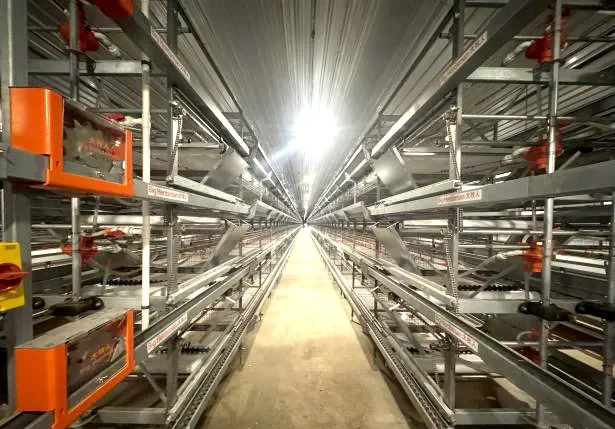
Transfer timing matters because the move from rearing to laying is not just a housing change. It is part of the flock’s biological transition into production. Penn State Extension says pullets should be moved around 2 to 4 weeks before they start laying, which gives birds time to adapt to the new housing before lay begins.
For commercial farms, that adaptation window is valuable. It helps birds settle into the new feeding system, drinking line, cage layout, and house environment before early egg production begins. That is one reason a good 小鸡笼系统 is usually planned as the first stage of a longer egg-production workflow rather than as a separate short-term setup.
The most practical answer is 16 to 18 weeks, with around 16 weeks being very common in commercial and extension references. Penn State says the move generally happens between 16 and 18 weeks of age, while Purdue’s poultry unit states that pullets are transferred to the layer unit around 16 weeks of age.
Other sources point in the same direction. The University of Connecticut’s poultry guide says laying hens are reared in growing houses until about 16 to 18 weeks and then moved into caged laying facilities, and the University of Hawaiʻi guide says birds should be transferred to the laying house at about 16 weeks of age.
Because it lines up with the end of the rearing phase and gives birds time to adapt before lay starts. North Carolina State layer reports repeatedly describe pullets completing the grow phase at 16 weeks and then transitioning to the laying phase during the 17th week, while another NCSU report says pullets were transferred to the laying house at 16 weeks.
That makes 16 weeks a strong operational benchmark. It is early enough for adaptation, but close enough to production that the farm is not carrying unnecessary extra rearing time in the grow house. For a well-planned 蛋鸡笼 project, that timing supports a smoother transition into egg production.
Because birds need time to learn the new system before the pressure of production begins. Penn State’s guidance is direct on this point: move pullets 2 to 4 weeks before they start laying. If the move happens too close to onset of lay, the birds may face housing stress at exactly the moment they should be shifting into stable production.
This is especially important in modern cage houses, where birds need to adapt to row layout, feeder access, nipple drinkers, light program, and daily movement patterns. Big Herdsman’s cage-system content also presents the layer house as an integrated operating environment, not just a place where birds are held.
If the flock is moved too early, the farm may shift birds before body development and flock uniformity are where they need to be. Michigan State notes that pullets that are nearly ready to move into the hen house are already approaching sexual maturity, which implies that transfer planning needs to follow bird readiness, not just calendar convenience.
In simple terms, early transfer can create a mismatch between bird development and production housing. That mismatch may show up as uneven adaptation, weaker flock consistency, or management inefficiency. A strong 产蛋量 project should time the transfer around both age and bird condition, not age alone.
Late transfer can be just as costly. If birds begin approaching lay in the rearing house, they lose valuable time to adapt to the laying environment before production starts. Penn State’s recommendation to move them before onset of lay is meant to prevent exactly this kind of disruption.
There is also a practical management risk. Once birds are close to lay, changes in housing, light program, and handling become harder to absorb smoothly. That is why many farms treat the move as part of the transition-to-lay program rather than a simple relocation task.
Preparation should focus on body condition, flock uniformity, lighting, water access, and adaptation to the type of housing the birds will enter. Penn State’s transition guidance and university pullet materials both point to the importance of preparing birds for the laying environment before production begins.
From a commercial equipment angle, preparation also means making sure the destination house is ready. Feed lines, drinkers, ventilation, and manure handling should already be stable before the flock arrives. That is one reason integrated 家禽养殖设备 planning usually produces better transfer results than piecemeal setup.
| Source or practice | Reported timing |
|---|---|
| Penn State transition guidance | 2–4 weeks before lay, generally 16–18 weeks |
| Purdue poultry unit | Around 16 weeks |
| UConn poultry overview | About 16–18 weeks |
| Hawaiʻi poultry guide | About 16 weeks |
| NCSU layer reports | 16-week grow phase, then lay transition |
These sources are consistent enough to support a practical commercial answer: most pullets are moved at about 16–18 weeks, with 16 weeks being a very common benchmark.
A major one. Big Herdsman’s pullet page describes its pullet cage system as a multi-tier rearing system designed for pullets, integrating feeding, drinking, manure cleaning, lighting, environmental control, and IoT functions to support uniform growth.
That matters because a good transfer starts with a good rearing phase. If pullets arrive in the layer house uneven, stressed, or poorly adapted to managed housing, the transfer age alone will not solve the problem. A well-designed 家禽生产 system should connect rearing quality with laying-house performance from the start.
They shape adaptation every day after the move. Big Herdsman’s layer-cage guide says modern systems support feeding, drinking, manure removal, and egg collection in an organized setup, while its integrated farming article emphasizes that ventilation, environment control, and automation need to work together.
That is why transfer success is not only about age. It is also about whether the birds enter a stable house. Strong 环境控制 helps birds settle faster by stabilizing airflow, temperature, and humidity during a sensitive stage.
They should plan the transfer age, the rearing-to-lay workflow, the destination housing format, and the environmental conditions as one system. Big Herdsman’s integrated-project content repeatedly frames poultry housing as a coordinated solution covering cage layout, feeding, drinking, manure removal, and climate control.
For B2B poultry projects, the right answer is not only “move at 16 weeks” or “move at 18 weeks.” The stronger answer is: move when the flock is ready, but usually within the 16–18 week window and before lay begins. That approach fits both the biology and the workflow of modern commercial farms.
Usually at 16 to 18 weeks of age, with around 16 weeks being a very common transfer point in research and extension references.
Because birds need time to adapt to the laying environment before egg production begins. Penn State recommends moving them 2 to 4 weeks before lay.
No. It is a common benchmark, but the practical window is often 16–18 weeks, depending on flock development, strain, and management plan.
Both matter, but age should be matched with flock readiness and transition planning. A late or poorly prepared move can hurt adaptation even if the age looks correct on paper.
 Chinese
  English
  Spanish
  French
  Russian
  Portuguese
  Arabic