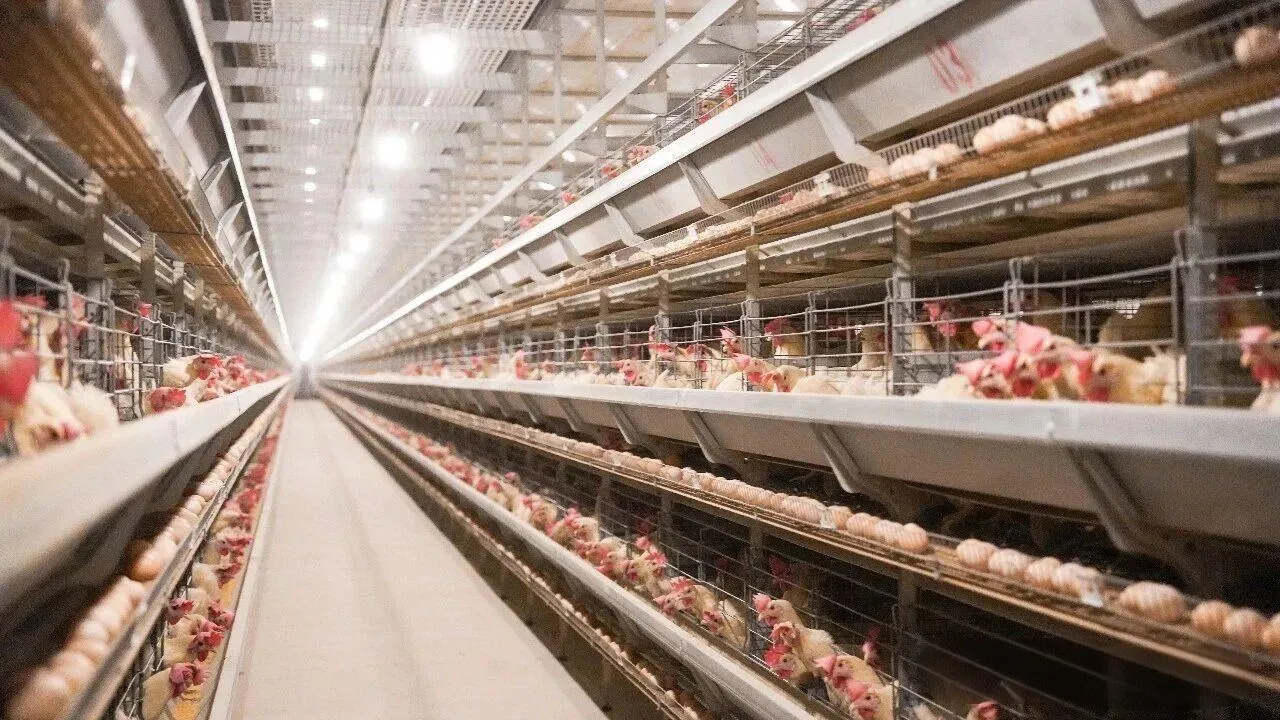
À medida que as operações avícolas se expandem para acomodar milhões de aves, o fator limitante não é mais apenas a capacidade de criar aves, mas também a capacidade de gerenciar sua produção biológica. Altas concentrações de amônia, poeira e umidade dentro de uma instalação não são meros incômodos; são imunossupressores que degradam o tecido pulmonar e predispõem os lotes a doenças respiratórias. Grande pastor Aborda a gestão de resíduos como um componente crítico da "Saúde Total da Casa", utilizando engenharia mecânica para remover resíduos e engenharia química para eliminar emissões.
Em sistemas de gaiolas para poedeiras e frangos de corte de alta densidade, a remoção imediata dos resíduos é a maneira mais eficaz de controlar a qualidade do ar dentro do galpão.
O sistema Big Herdsman utiliza correias de polipropileno (PP) de alta resistência localizadas sob cada nível das gaiolas. Ao contrário dos sistemas raspadores mais antigos, essas correias proporcionam uma barreira contínua entre as aves e os dejetos.
Tração sem atrito: Nossos rolos de acionamento são projetados com uma superfície de aderência especial para evitar o deslizamento da correia, mesmo sob o peso de várias toneladas de esterco úmido.
Frequência automatizada: O sistema é programado para funcionar em intervalos específicos. Ao remover o esterco enquanto ainda está “fresco”, evitamos a decomposição anaeróbica que leva à liberação de altas concentrações de amônia ($NH_3$) e sulfeto de hidrogênio ($H_2S$).
Uma das principais inovações dos sistemas Big Herdsman é a integração de tubos de secagem a ar junto às correias transportadoras de estrume.
A física da secagem: Ao direcionar parte do fluxo de ar da casa através da esteira de esterco, reduzimos o teor de umidade de 75% para menos de 30% em poucas horas.
Benefícios da biossegurança: Patógenos, incluindo Salmonella e E. coli, prosperam em lama úmida. Ao desidratar rapidamente o esterco, criamos um material biologicamente estável que inibe o crescimento bacteriano e a proliferação de moscas, melhorando significativamente o perfil sanitário das instalações.
Com o endurecimento das regulamentações ambientais globais — como os padrões LEED e os limites regionais de emissão de nitrogênio —, o ar que sai do aviário precisa ser tão limpo quanto o ar que entra.
O sistema de tratamento de ar de exaustão para gado da Big Herdsman funciona como um filtro em escala industrial para a fazenda.
Captura de poeira: Grandes instalações avícolas produzem quantidades significativas de caspa de penas e poeira de ração. Nosso sistema utiliza uma cortina d'água primária para reter essas partículas, impedindo que sejam transportadas para a comunidade ao redor.
Neutralização da amônia: Por meio de um processo de purificação química — geralmente envolvendo uma solução ácida segura no ciclo da água — o gás amônia é capturado e convertido em sulfato de amônio, um valioso fertilizante líquido. Isso pode reduzir as emissões totais de nitrogênio da fazenda em mais de 70%.
A gestão de resíduos deixou de ser um "custo irrecuperável" e passou a ser uma transição para uma economia circular.
Granulação e produção de fertilizantes: O esterco seco produzido pelos sistemas Big Herdsman é ideal para a granulação. Isso permite que os produtores embalem e vendam fertilizante orgânico de alta qualidade, transformando um problema de resíduos em uma fonte de receita secundária.
Relações de vizinhança: Ao neutralizar eficazmente os odores através de um tratamento avançado dos gases de escape, a Big Herdsman permite que os produtores operem mais perto de zonas residenciais ou zonas ecológicas protegidas sem conflitos legais ou sociais.
A engenharia de gestão de resíduos também determina a longevidade do edifício. A amônia é um potente agente corrosivo que ataca o aço comum.
Integridade da barreira de vapor: Ao manter um ambiente seco e utilizar transportadores de esterco de alta precisão, protegemos a estrutura metálica da corrosão interna. Essa sinergia entre a remoção de resíduos e o projeto estrutural garante que o edifício mantenha seu valor ao longo de um ciclo de vida de 20 anos.
Na Big Herdsman, acreditamos que o futuro da pecuária depende da filosofia da "Fazenda Limpa". Ao integrar a remoção mecânica, a secagem rápida e a purificação do ar, fornecemos a infraestrutura necessária para uma produção de alto rendimento, biologicamente segura e ambientalmente responsável. No mercado global de 2026, a sustentabilidade não é apenas uma escolha moral; é uma exigência técnica para o sucesso operacional a longo prazo.
Grandes RebanhosHomem de Grandes Rebanhos
 English English
  Spanish
 French
 Russian
 Portuguese
 Arabic
 Chinese
 German
 Italian
 Japanese
 Korean
 Turkish
 Vietnamese
 Thai
Thai
 Dutch
Dutch
 Polish
 Indonesian
 Hindi
Hindi
 Bengali
 Urdu
Urdu