High labor costs, unstable egg output, poor manure management, and difficult daily inspection can reduce the profitability of a poultry farm. For commercial egg production, a modern sistema de gaiolas de proteção helps farms improve space utilization, automate routine work, protect egg quality, and create a cleaner poultry house environment.
A layer cage system is a structured poultry housing solution designed for laying hens. It integrates cages, feeding, drinking, egg collection, manure removal, and climate control into one efficient production system. For medium and large poultry farms, it supports higher stocking density, lower labor demand, cleaner egg handling, and more stable egg production.
A sistema de gaiolas de proteção is a poultry housing system used to raise laying hens in organized cage rows or tiers. Instead of managing birds freely on the floor, the farm uses a structured cage layout to improve feeding, drinking, egg collection, manure handling, and daily inspection.
For commercial egg farms, this system is not only about cages. It is a complete production framework. A well-designed layer cage system should work together with automatic feeding lines, nipple drinking systems, egg conveyors, manure belts, ventilation equipment, and environmental controllers.
Grande pastor sistema de gaiolas de proteção is positioned for high-density poultry farming with automated egg collection, manure cleaning, and climate control for a healthier poultry environment.
Commercial egg production depends on consistency. Birds need stable feed, clean water, suitable temperature, good airflow, and clean housing. If any part of the system fails, egg production and egg quality may drop.
A modern layer cage system helps poultry farms solve several daily problems:
| Desafio da Fazenda | Layer Cage System Solution |
|---|---|
| Alto custo de mão de obra | Alimentação automática, coleta de ovos e remoção de esterco. |
| Low space efficiency | Multi-tier cage layout |
| Quebra de ovo | Smooth egg collection and conveyor design |
| Higiene precária | Remoção regular de esterco |
| Difficult inspection | Organized cage rows and service aisles |
| Climate stress | Integrated ventilation and environment control |
For farms planning new poultry houses or upgrading existing buildings, sistemas completos de produção avícola help connect cage layout, feeding, drinking, ventilation, lighting, and automation into one practical solution.
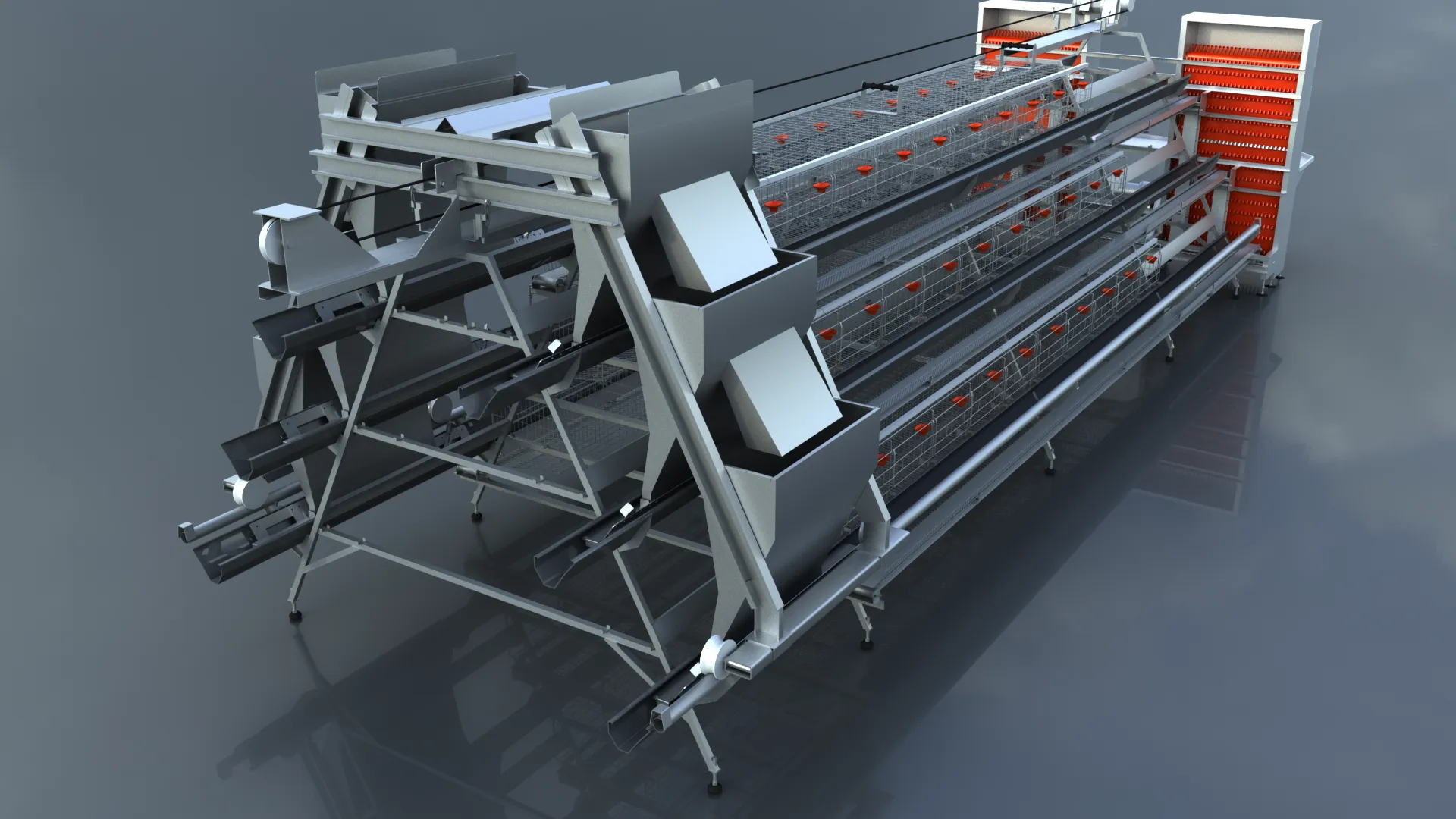
A complete layer cage system usually includes several connected modules. Each part must match the poultry house layout and production target.
The main components include:
| Componente | Função |
|---|---|
| Estrutura da gaiola | Houses laying hens in organized units |
| Sistema de alimentação | Delivers feed evenly across cage rows |
| Sistema de bebedouro | Provides clean water through nipple lines |
| Sistema de coleta de ovos | Moves eggs safely to collection points |
| Sistema de remoção de estrume | Removes manure regularly to improve hygiene |
| Controle ambiental | Manages temperature, humidity, airflow, and lighting |
| Control system | Helps monitor and adjust equipment operation |
When these systems are designed together, the poultry house becomes easier to manage. Workers spend less time on repetitive tasks and more time on inspection, flock health, and production control.
Layer cage systems are often divided into different structural designs. Two common options are A-type and H-type cage systems.
An A-type layer cage has a stepped structure. It is often suitable for small and medium poultry farms or projects that need strong natural ventilation and lower initial investment.
Grande pastor Gaiola de camada tipo A is described as a high cost-performance cage design suitable for high-temperature areas. It can be designed with 3–4 tiers and configured with manure cleaning and feeding systems according to project requirements.
An H-type layer cage is usually selected for larger, more automated egg production projects. It supports higher stocking density and better vertical space utilization.
For large farms, H-type systems are often matched with automatic feeding, egg collection, manure belts, ventilation systems, and smart controllers. This makes them suitable for projects where labor reduction and centralized management are priorities.
A layer cage system improves egg production by creating stable daily conditions. Laying hens perform better when feed, water, lighting, airflow, and house temperature are consistent.
A good system helps farms:
For commercial buyers, the real value is not only higher output. It is more predictable production. When farm operation becomes more stable, planning, labor management, and sales become easier.
Grande pastor egg production equipment solutions provide related systems for layer cage farms, including cage equipment, egg collection, manure conveyors, and environment control.
Feeding and drinking systems are central to egg production. If birds do not receive feed evenly, flock uniformity and egg output may be affected. If drinking systems leak or provide unstable water pressure, the poultry house may become wet and harder to manage.
A modern layer cage system normally uses automatic feeding equipment and nipple drinking lines. These systems help reduce labor, feed waste, and water contamination.
Good feeding and drinking design should consider:
| Design Factor | Por que isso importa |
|---|---|
| Número do nível da gaiola | Affects feed line layout and water access |
| Bird age | Determines drinking line height and feed access |
| Comprimento da casa | Affects feed delivery distance |
| Acesso para manutenção | Helps workers inspect and clean systems |
| Water pressure | Supports stable drinking performance |
When feeding and drinking systems match the cage layout, the farm can operate more smoothly and reduce daily management risks.
Egg collection is one of the most important processes in a layer farm. Manual egg collection requires more labor and increases the risk of cracked or dirty eggs. Automatic egg collection improves handling efficiency and protects egg quality.
Um bom sistema de coleta de ovos moves eggs smoothly from cage rows or nests to a collection area. Big Herdsman’s egg collection product information highlights cleaner nests, better ventilation, reduced egg breakage, and durable conveyor belts for smoother operation.
For farms with larger production volume, an transportador de ovos can help move eggs across the poultry house more efficiently. Big Herdsman’s egg conveyor page states that its system can reach up to 65,000 eggs per hour and is designed for smooth, low-breakage egg transport.
For commercial farms, this means fewer workers, less repeated handling, lower breakage risk, and better daily productivity.
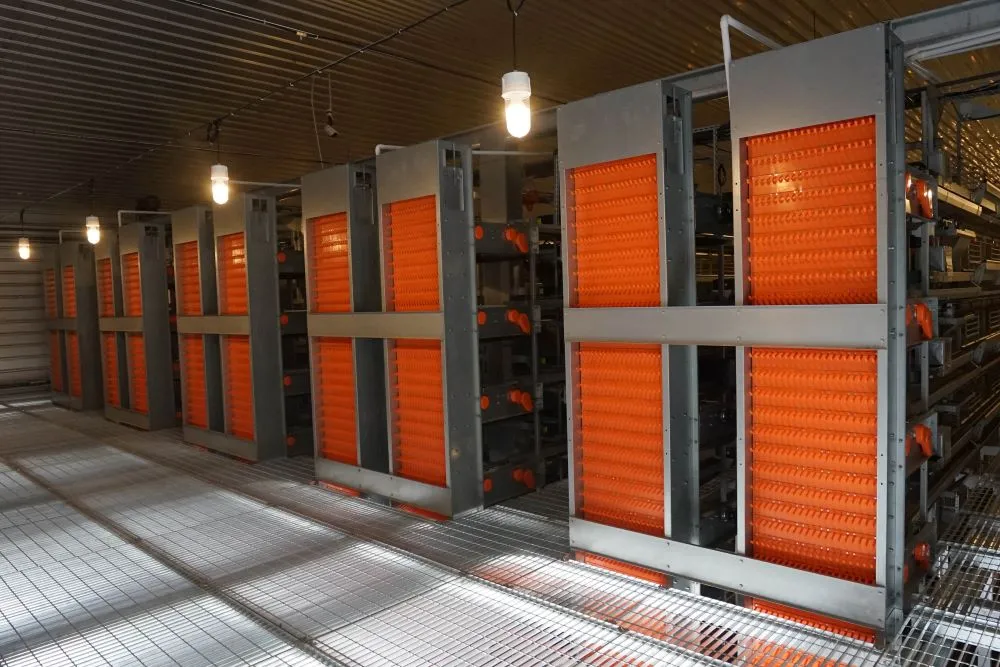
Manure management directly affects air quality, hygiene, ammonia level, and bird comfort. If manure stays inside the poultry house too long, it can increase odor, moisture, and disease pressure.
Modern layer cage systems often use manure belts under cage rows. Manure is moved regularly to reduce buildup and improve the poultry house environment. For larger farms, cross conveyors or outside conveyors may be used to move manure to storage or treatment areas.
Grande pastor sistemas de transporte de esterco support automatic manure transportation for cleaner poultry house management. For projects that require manure transport outside the house, an transportador de esterco externo can be integrated into the overall layout.
A clean poultry house is not just easier to manage. It supports better bird health, better air quality, and more stable egg production.
Climate control is essential in any layer cage system. Laying hens are sensitive to temperature, humidity, airflow, and lighting. Poor climate control can reduce egg production and increase stress.
Um completo solução de controle ambiental may include fans, cooling pads, heaters, controllers, curtains, air inlets, lighting systems, and panel doors. Big Herdsman’s environment control page describes systems designed for airflow, temperature control, energy efficiency, poultry health, and productivity.
For hot regions, cooling pads, fans, and air inlet control are especially important. For colder regions, insulation, heating, and controlled ventilation become more important.
A porta do painel can also support sealing, insulation, and airflow control in poultry houses. When used with fans, cooling pads, and controllers, it helps the entire climate control system work more efficiently.
Not every farm needs the same layer cage system. The best design depends on farm size, production target, house layout, local climate, labor availability, and automation requirements.
Small and medium farms may focus on cost-effective cage layouts, practical feeding systems, and simple manure cleaning. Large commercial farms may require higher automation, multi-tier H-type cages, central egg collection, automatic manure belts, and smart climate control.
Before choosing a layer cage system, farm owners should confirm:
| Pergunta de planejamento | Por que isso importa |
|---|---|
| How many laying hens will be raised? | Determines cage quantity and house size |
| What is the house dimension? | Affects cage row layout and aisle design |
| Qual é o clima local? | Affects ventilation, cooling, and heating |
| How many workers are available? | Determina o nível de automação |
| How will eggs be collected? | Affects conveyor route and collection point |
| Como será feita a remoção do esterco? | Affects hygiene and equipment layout |
| A fazenda será ampliada posteriormente? | Afeta a escalabilidade do sistema |
A reliable supplier should design the cage system around these project details instead of offering only a standard model.
A standard layer cage system is mainly designed for table egg production. A layer breeder cage is designed for breeder flocks, where fertilized egg production and bird grouping are more important.
Grande pastor gaiola para reprodutoras de postura is designed for high fertilization rates, stable egg collection, low breakage, adjustable drinking lines, and automated climate control with real-time monitoring.
The difference is clear:
| Sistema | Objetivo principal | Key Focus |
|---|---|---|
| Sistema de gaiolas para poedeiras | Table egg production | Egg output, hygiene, automation |
| Gaiola para reprodutoras poedeiras | produção de ovos fertilizados | Fertility, bird grouping, egg protection |
For farms producing hatching eggs, breeder cage design should be considered separately from ordinary layer cage equipment.
Automation helps layer farms reduce repetitive work and improve daily consistency. In a modern layer cage system, automation may cover feeding, drinking, egg collection, manure removal, lighting, ventilation, and alarm monitoring.
This matters because large poultry farms cannot depend only on manual work. Manual feeding may be uneven. Manual egg collection may cause breakage. Manual manure cleaning may be delayed. Manual climate control may react too late.
Automation helps farms:
For overseas B2B buyers, automation also makes training and operation easier because the system follows a clear process.
Choosing a layer cage supplier is a long-term decision. A low purchase price may look attractive, but poor material quality, weak system matching, or limited after-sales support can increase long-term costs.
Before choosing a supplier, buyers should evaluate:
| Supplier Capability | Por que isso importa |
|---|---|
| Capacidade de projeto de sistemas | Prevents mismatch between cage, feeding, egg collection, manure, and ventilation |
| Qualidade de fabricação | Affects service life and daily reliability |
| Capacidade de personalização | Helps match climate, house size, and production target |
| Experiência em automação | Reduz a mão de obra e melhora a consistência. |
| Guia de instalação | Supports overseas project delivery |
| Suporte pós-venda | Protects long-term farm operation |
Grande pastor layer cage equipment category describes complete, cost-effective, fully automated layer cage equipment, including egg, pullet, and breeder cage options, with customization for different climate conditions and a listed service life of 15–20 years.
Big Herdsman Machinery Co., Ltd. focuses on complete automated poultry farming systems, including product research, system design, manufacturing, and service. For commercial egg farms, this system-level capability is important because layer cages must work with feeding, drinking, egg collection, manure removal, and environment control.
Big Herdsman can support layer cage projects with:
For farms planning a new egg production project or upgrading an existing poultry house, contacting Equipe de equipamentos avícolas da Big Herdsman is a practical step toward building a more efficient and automated layer farm.
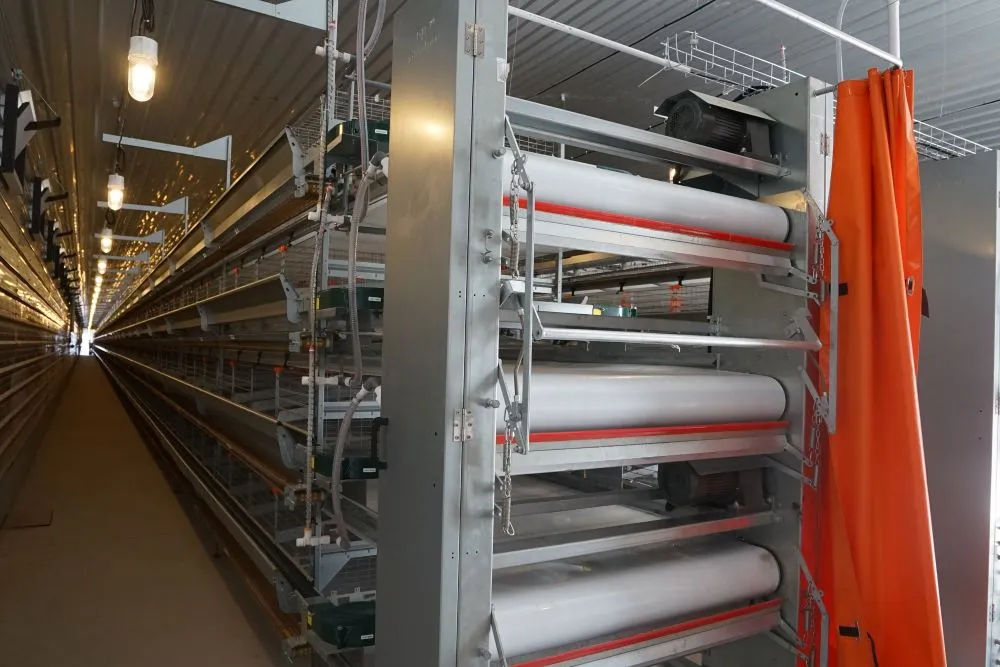
A layer cage system is a poultry housing system designed for laying hens. It organizes birds in cage rows or tiers and integrates feeding, drinking, egg collection, manure removal, and climate control.
A complete layer cage system usually includes cage structures, feeding lines, nipple drinking systems, egg collection equipment, manure belts, ventilation equipment, lighting, and environmental controllers.
Commercial egg farms use layer cage systems to improve space utilization, reduce labor, keep eggs cleaner, simplify daily inspection, improve manure management, and support stable egg production.
A-type layer cages are often suitable for smaller or medium farms and areas with good natural ventilation. H-type layer cages are commonly used for larger farms that need higher stocking density and stronger automation.
Automatic egg collection reduces manual handling, lowers egg breakage risk, improves hygiene, and increases daily collection efficiency.
Yes. A layer cage system can be customized according to poultry house size, bird capacity, local climate, automation level, egg collection route, manure removal direction, and future expansion plans.
A sistema de gaiolas de proteção is one of the most important investments for commercial egg production. It helps poultry farms improve space utilization, reduce labor, protect egg quality, manage manure more efficiently, and create a stable poultry house environment.
For long-term success, layer cages should not be selected as standalone products. They should be designed as part of a complete poultry farming system that includes feeding, drinking, egg collection, manure removal, ventilation, and environment control.
Big Herdsman provides integrated layer cage systems and customized poultry farming solutions for global B2B buyers, helping commercial egg farms build efficient, automated, and scalable production operations.
 English English
  Spanish
 French
 Russian
 Portuguese
 Arabic
 Chinese
 German
 Italian
 Japanese
 Korean
 Turkish
 Vietnamese
 Thai
Thai
 Dutch
Dutch
 Polish
 Indonesian
 Hindi
Hindi
 Bengali
 Urdu
Urdu