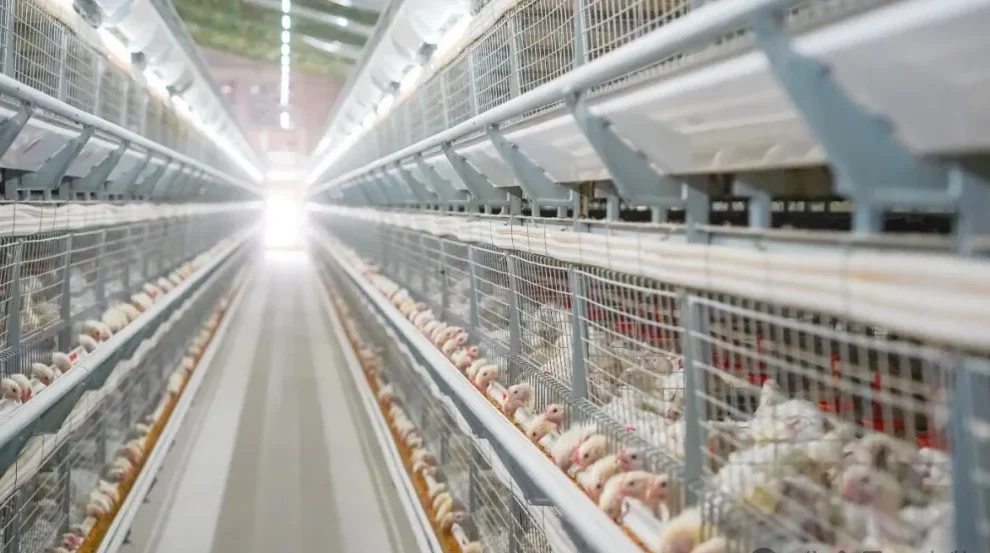
In the modern livestock landscape, the successful commissioning of a million-bird facility is no longer a matter of simply purchasing cages or fans. It is a complex architectural and logistical undertaking that requires a “Systems Engineering” mindset. A Grande pastor Turnkey Project represents a holistic approach where every component—from the orientation of the [Steel Structure House] to the slope of the drainage—is pre-calculated to work as a unified industrial machine. By eliminating the friction between disparate suppliers, turnkey integration ensures that biological performance is built into the very foundation of the farm.
The efficiency of a poultry farm begins long before the first steel beam is raised. Strategic placement on the land dictates the operational costs for the next twenty years.
Big Herdsman engineers conduct detailed topographical surveys to align houses with prevailing wind patterns.
Minimizing Fan Load: Proper orientation allows the [Environment Control] system to utilize natural pressure gradients, reducing the electrical load on [Ventilation Fans] during transitional seasons.
Cross-Contamination Prevention: In multi-house complexes, the “Staggered Layout” ensures that the exhaust air from one house—laden with heat and dust—is not pulled directly into the cooling pads of the adjacent house. This thermal separation is critical for maintaining consistent performance across the entire farm.
A turnkey design physically separates “Clean” and “Dirty” workflows.
The Perimeter Shield: Feed silos and egg collection hubs are positioned at the periphery of the biosecurity zone. This allows feed trucks and egg transport vehicles to service the farm without crossing the internal paths used by farm personnel, effectively creating a “Bio-Fence” through physical geography.
The most common point of failure in fragmented projects is the mismatch between the building shell and the internal equipment.
In a Big Herdsman turnkey facility, the [Steel Structure House] is not a generic shell; it is an exoskeleton for the production system.
Load-Path Integration: The structural frames are pre-drilled and reinforced at the exact points where the [Feeding System] and drinking lines will be suspended. This prevents the structural fatigue and sagging often seen in houses where equipment is retrofitted onto non-specialized beams.
The Airtight Seal: Wall panels are pre-cut at the factory to the exact specifications of the [Air Inlets] and [Cooling Pad Systems]. This “Precision Fit” ensures a perfectly airtight seal, which is the mechanical prerequisite for maintaining the negative pressure required for effective tunnel ventilation.
Turnkey engineering includes the design of the electrical and water “arteries” of the farm.
Redundant Power Architecture: We design centralized control rooms with automatic failover to backup generators. In a high-density house, a ten-minute power failure can be catastrophic; integrated engineering ensures that every [Ventilation Fan] and sensor is backed by a redundant power loop.
The financial and operational advantage of a turnkey approach lies in the reduction of “Project Friction.”
By managing the supply chain from a single point, Big Herdsman avoids the delays caused by shipping conflicts between multiple vendors.
Simultaneous Installation: While the steel structure is being erected, the [Manure Removal Systems] and cages are prepared for installation in a synchronized timeline. This parallel workflow typically reduces the time from “breaking ground” to “first flock placement” by 25% to 30%.
Every mechanical component in a turnkey project is designed to communicate with the Rede de Fazenda Inteligente ecosystem. There are no “translation errors” between the fans of one company and the controller of another. This total digital harmony allows for 100% accurate data logging, providing the owner with absolute transparency over every watt of energy and gram of feed used.
A turnkey project is built with the “End-of-Life” in mind.
Maintenance Simplicity: Using standardized components across the entire facility means the farm only needs to stock one type of motor, one type of sensor, and one type of belt. This simplifies the inventory for the maintenance team and ensures that downtime is kept to a absolute minimum.
A Big Herdsman Turnkey Project is a strategic investment in operational certainty. By integrating structural engineering, aerodynamic design, and digital intelligence into a single delivery model, we provide producers with more than just a farm—we provide a high-performance industrial asset designed for the challenges of 2026. In the pursuit of global food security, the turnkey model is the most reliable path to achieving the scale, safety, and efficiency required by the modern world.
 English English
  Spanish
 French
 Russian
 Portuguese
 Arabic
 Chinese
 German
 Italian
 Japanese
 Korean
 Turkish
 Vietnamese
 Thai
Thai
 Dutch
Dutch
 Polish
 Indonesian
 Hindi
Hindi
 Bengali
 Urdu
Urdu