When eggs stay too long in dirty nests, farms lose money quietly. Breakage rises, labor increases, and hygiene becomes harder to control. The best answer is a method that is fast, gentle, clean, and easy to scale as the farm grows.
The best way to collect chicken eggs is to gather them quickly after laying, keep nests clean and dry, and reduce rough handling. For small flocks, that often means timely manual collection. For modern commercial farms, it usually means using an sistema automático de recolha de ovos that moves eggs efficiently from the laying area to a central point.
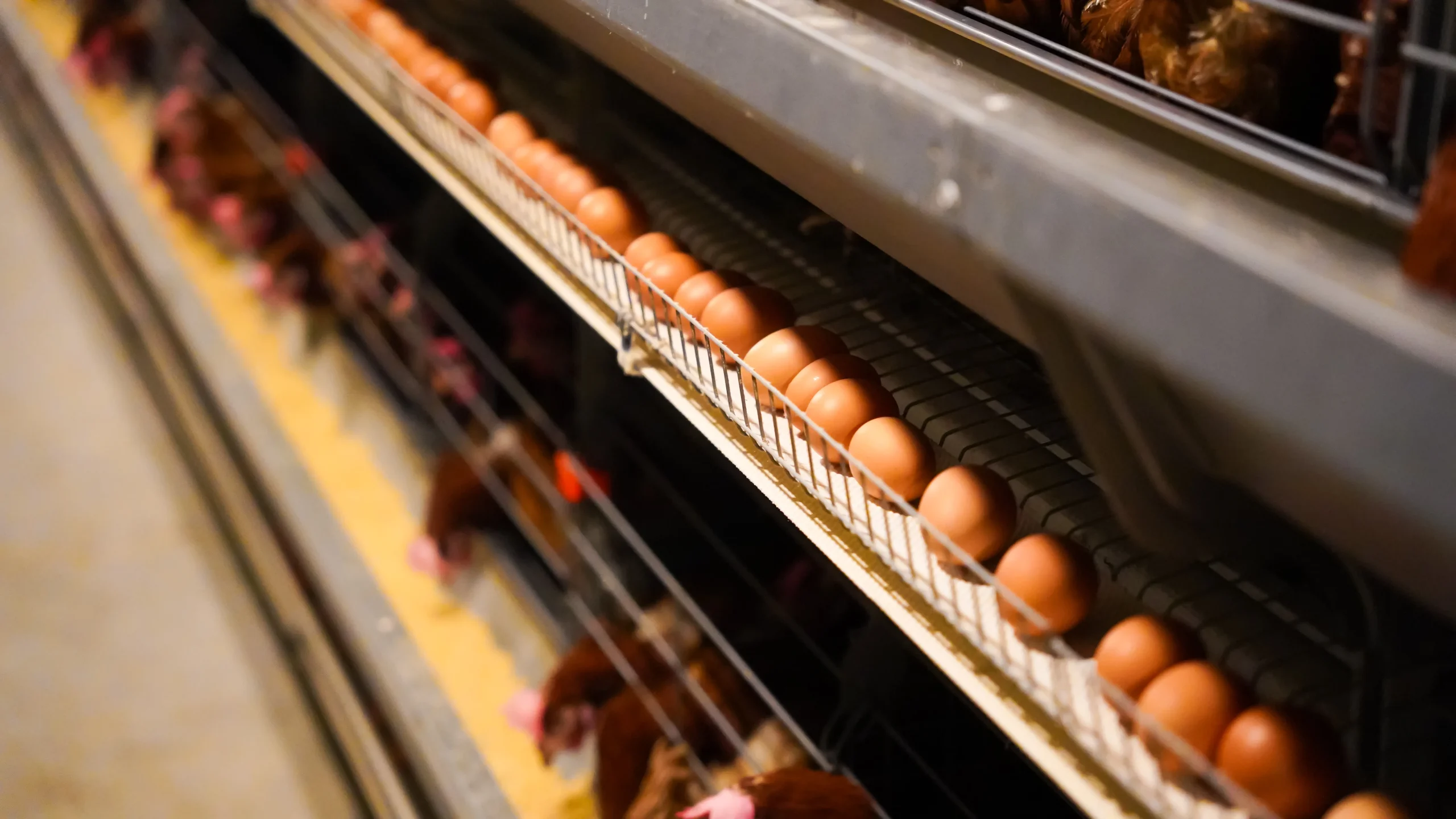
The longer an egg remains in the nest or on the floor, the greater the chance it becomes dirty, cracked, or damaged. Fast collection protects product quality and reduces avoidable losses.
For commercial farms, speed is not just about cleanliness. It is also about labor efficiency, workflow stability, and product consistency. In large projects, slow egg collection creates bottlenecks that affect the whole packing process. That is why many farms are upgrading their produção de ovos systems around better collection efficiency.
Manual egg collection still works for very small flocks. It is simple and low-cost. But as farm size grows, manual handling becomes slower, less consistent, and more labor-intensive. That is where automation starts to show its real value.
For medium and large farms, recolha automática de ovos is usually the better solution. It helps reduce breakage, standardize daily work, and move eggs more quickly through the house. It also lowers the number of times eggs are touched by hand, which supports cleaner handling.
| Collection method | Best fit | Main advantage | Main limitation |
|---|---|---|---|
| Manual collection | Pequenos rebanhos | Low initial cost | Alta demanda por mão de obra |
| Semi-automatic collection | Medium farms | Better control and moderate investment | Still depends on more labor |
| Automatic collection | Grandes fazendas comerciais | Higher efficiency and lower handling | Needs better system planning |
Eggs should be collected regularly and as soon as practical after laying. The goal is to reduce the time eggs stay in nests, on belts, or in exposed house conditions.
In manual systems, that means frequent collection rounds each day. In automated farms, it means designing the system so eggs move steadily and smoothly through the house. A good collection routine reduces dirt, lowers breakage, and helps the whole production schedule stay predictable.
Good egg collection starts before the egg reaches the conveyor. If nests are dirty, poorly placed, or uncomfortable for hens, more eggs will be laid in the wrong place. That creates floor eggs, dirty eggs, and extra work.
This is why the best collection method is not only about machinery. It is also about nesting conditions, flooring, bird behavior, and house layout. A clean and attractive nesting area makes any collection method work better, whether the farm is using manual collection or full automation.
A modern automatic system often includes nests or laying areas, egg belts, conveyors, and a central collection point. In larger projects, the design may also include transfer points, lifts, and buffer sections to keep egg flow gentle and stable.
For corporate buyers, this matters because the best system is not the one with the most parts. It is the one that matches real farm scale, flock size, labor structure, and future expansion needs. A practical system should be easy to run, easy to maintain, and able to protect egg quality every day.
Well-designed sistemas de gaiolas para camas improve egg collection by helping eggs move out of the bird area more quickly and more cleanly. That reduces the chance of trampling, contamination, and unnecessary handling.
This is one reason why many commercial egg farms choose integrated housing and collection design rather than treating egg collection as a separate add-on. When housing and egg transfer work together, the daily operation becomes cleaner and more efficient.
In-house collection is the bridge between local egg belts and the final receiving point inside the poultry house. It helps move eggs smoothly across rows, tiers, or sections without depending too heavily on manual transport.
For larger farms, coleta de ovos interna makes a major difference because it improves internal logistics. It supports a more organized workflow, reduces unnecessary labor movement, and helps farms maintain better rhythm from laying to packing.
The best way to reduce breakage and contamination is to combine good nest hygiene with fast, gentle collection. Farms should focus on four basics:
These steps sound simple, but they are powerful. Once egg collection becomes more organized, the whole farm usually sees gains in labor efficiency, product quality, and management confidence.

Engineering contractors and agricultural technology service companies should evaluate egg collection as part of the total poultry house plan. Key considerations include:
A good design makes collection easier not only today, but also when the farm expands. That is one reason many buyers prefer full project support instead of buying separate pieces from different suppliers.
Because egg collection does not work alone. It depends on housing, bird flow, labor layout, climate control, and daily management routines. Large buyers want reliable business performance, not just one machine that looks good in a quote sheet.
That is why many professional farms prefer an integrated supplier that can support egg collection, housing, and overall farm planning together. In modern commercial poultry projects, system consistency often matters more than any single piece of equipment.
As soon as possible after laying. Faster collection usually means cleaner eggs and less breakage.
For medium and large farms, yes. It reduces labor pressure, improves consistency, and protects egg quality better.
Use clean nests, keep bedding dry, and remove eggs from the laying area quickly.
They are more likely to become dirty, damaged, or overlooked, which adds labor and reduces product quality.
It is especially useful for commercial farms with larger house layouts, more tiers, and higher daily egg volume.
Choose a supplier that understands egg handling, housing systems, and long-term after-sales support, not just conveyors.
 English English
  Spanish
 French
 Russian
 Portuguese
 Arabic
 Chinese
 German
 Italian
 Japanese
 Korean
 Turkish
 Vietnamese
 Thai
Thai
 Dutch
Dutch
 Polish
 Indonesian
 Hindi
Hindi
 Bengali
 Urdu
Urdu