
菜单
菜单
许多养殖场都寻求“最佳”家禽饲养系统,仿佛存在一个通用的答案。然而,不合适的系统搭配不合适的禽类品种,会迅速降低生产效率并造成资金浪费。最佳的饲养系统应该是能够满足您的生产目标、气候条件、劳动力模式和市场需求的系统。.
没有一种家禽饲养系统适用于所有农场。对于商品蛋鸡养殖而言,笼养或改良笼养系统在鸡蛋清洁度、自动化程度和效率方面通常表现出色,而肉鸡生产则通常采用地面饲养。最佳选择取决于您饲养的是蛋鸡、肉鸡、育成鸡还是种鸡,以及您的买家对最终产品的要求。.

因为家禽舍必须与禽类品种、市场需求和饲养管理方式相匹配。联合国粮农组织指出,家禽需要满足其生理需求的环境才能充分发挥其遗传潜力,这意味着禽舍质量取决于是否合适,而不是采用某种通用设计。.
That is why the “best” system changes by purpose. A commercial layer farm, a broiler farm, a breeder operation, and a pullet-rearing project all need different housing logic. Big Herdsman’s site structure reflects that by separating 层笼系统, 肉鸡地板解决方案、育成鸡系统、种鸡笼和气候控制系统,而不是将家禽饲养视为一种通用产品。.
最佳的鸡舍系统应能同时满足生产目标、提升鸡只舒适度、保持卫生、提高劳动效率并便于管理。联合国粮农组织强调了适宜环境的重要性,而美国兽医协会(AVMA)的鸡舍评估报告则表明,不同的鸡舍系统在动物福利、生产和效率等方面的表现各不相同。.
从商业角度来看,买家通常会比较以下几点:
这些因素将一个“好的”住房理念转化为正确的农业系统。.
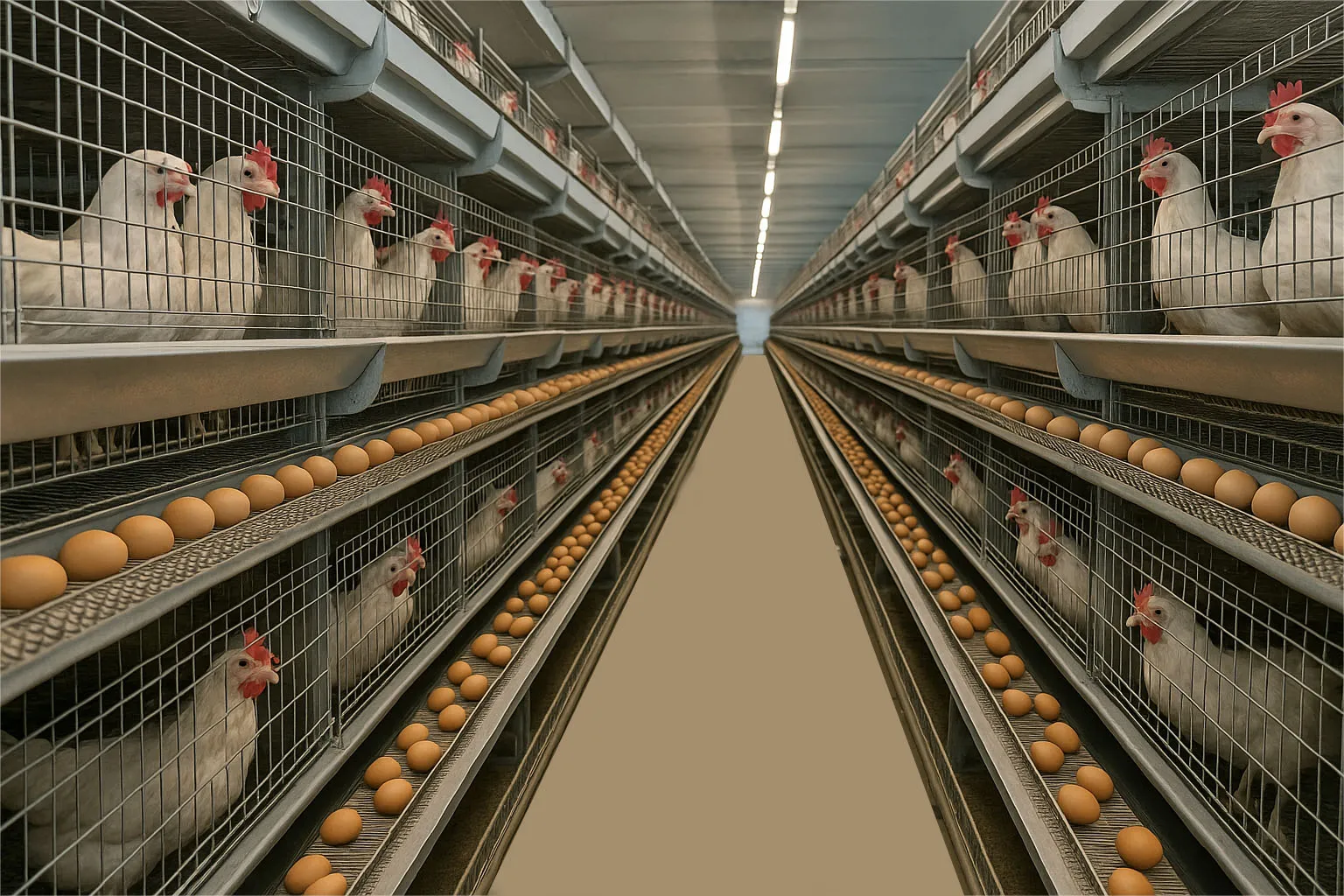
对于商业化鲜蛋生产而言,如果农场优先考虑鸡蛋的清洁度、自动化程度和生产效率,那么笼养或改良笼养系统通常是不错的选择。美国兽医协会(AVMA)指出,笼养系统的鸡蛋产量、质量和生产效率通常最高;美国国家生物技术信息中心(NCBI)的综述也指出,笼养系统有助于实现自动化,并能更彻底地将鸡蛋与粪便分离。.
这就是为什么许多层操作选择的原因 层笼系统. Big Herdsman positions it around automated egg collection, manure cleaning, and climate control, which aligns closely with what commercial layer farms usually want from a housing system.
For broilers, floor-rearing systems are widely used because meat-bird production relies on a different management pattern than laying-hen production. Big Herdsman’s broiler-floor page presents floor rearing as a complete house solution for broiler production, including feeding, drinking, ventilation, and environmental control.
因此,如果农场的目标是生产肉鸡,那么 肉鸡地面饲养 相比蛋鸡笼式饲养,鸡舍通常更适合鸡群自然生长。这很好地说明了为什么“最佳家禽饲养方式”完全取决于农场的生产内容。.
Pullets and breeders need specialist systems rather than generic houses. Big Herdsman’s pullet cage system is designed for healthy layer development, while its breeder cage system is built around fertilization support, egg collection, and breeder-bird management.
这意味着育成鸡场不应简单地照搬蛋鸡舍,种鸡场也不应简单地使用通用蛋笼。最佳的饲养系统应与该禽类的生物学和管理需求相匹配。.
它们对动物福利有着显著的影响。美国兽医协会(AVMA)和美国国家生物技术信息中心(NCBI)的评估均表明,笼养系统和非笼养系统在动物福利方面存在不同的权衡。传统笼养系统在效率和清洁度方面往往表现优异,而非笼养系统则能提供更多的活动和行为机会。.
因此,最佳的饲养系统还取决于谁将购买鸡蛋或家禽产品。为需要非笼养产品的零售商供货的农场,其饲养系统选择可能与优先考虑自动化和鸡蛋处理效率的农场有所不同。.
Because no housing system performs well without a stable environment. FAO says poultry need housing that meets their physiological needs, and Big Herdsman’s climate-control pages describe temperature, humidity, and airflow management as central to bird comfort and consistent production performance.
因此 禽舍气候控制系统 规划应贯穿所有住房决策,无论项目是笼式住宅还是楼层式住宅。气候稳定性并非锦上添花,而是住房系统本身不可或缺的一部分。.
他们应该根据项目目标而非理念进行比较。美国兽医协会(AVMA)的文献综述和比较文件显示,笼养系统在生产效率和鸡蛋清洁度方面通常表现出色,而非笼养系统则提供更大的行为自由度和活动空间。两者在所有方面都不是最佳的。.
这就是为什么许多商业买家会比较整个系统的原因。 家禽养殖设备 应该综合考虑各种方案,而不是仅仅比较单一的房屋品牌。真正的问题是,哪种系统最适合农场的商业模式。.
| 生产目标 | 通常首选的系统 | 主要原因 |
|---|---|---|
| 食用鸡蛋 | 笼子或改良笼 | 更干净的鸡蛋、自动化、效率 |
| 肉鸡 | 楼房 | 更适合肉禽管理 |
| 育成鸡饲养 | 育成鸡笼或控制饲养室 | 支持统一发展 |
| 选育 | 繁殖笼或专用繁殖笼 | 支持施肥和育种管理 |
This table synthesizes Big Herdsman’s category structure and broader housing guidance from AVMA and FAO.
They should focus on system fit, not just unit cost. Key questions include building size, climate, labor, manure plan, expansion potential, and market positioning. Big Herdsman’s broader livestock-farming positioning highlights housing, feeding, drinking, manure removal, and climate control as a combined commercial solution.
对于项目型买家而言,这种系统性视角至关重要。即使房屋设计在技术上无可挑剔,如果与当地情况或买家需求不符,仍然可能是一项糟糕的投资。.
首先确定鸟类种类和最终市场。然后考察动物福利预期、自动化需求、气候风险以及售后支持。最好的禽舍系统是那些在运营和商业上都能长期有效运作的系统,而不仅仅是在某一方面看起来最强的系统。.
对于许多认真的买家来说,正确的做法是与一家能够综合评估蛋鸡、肉鸡、种鸡、气候和粪便处理策略的综合供应商进行比较。这通常是找到真正适合农场的鸡舍系统的最快捷径。.
没有一种系统是绝对最佳的。最佳系统取决于禽类品种、生产目标、气候、劳动力模式和市场需求。.
对于许多商业蛋鸡养殖场来说,笼养或改良笼养系统是很好的选择,因为鸡蛋清洁、自动化程度高、效率高。.
肉鸡养殖场通常采用地面饲养舍,因为与蛋鸡笼养系统相比,地面饲养舍更适合肉鸡的饲养管理。.
是的。稳定的温度、气流和湿度对所有家禽饲养系统都至关重要。.
 English English
  Spanish
 French
 Russian
 Portuguese
 Arabic
 Chinese
 German
 Italian
 Japanese
 Korean
 Turkish
 Vietnamese
 Thai
Thai
 Dutch
Dutch
 Polish
 Indonesian
 Hindi
Hindi
 Bengali
 Urdu
Urdu