Na avicultura, é comum usar nomes diferentes para o mesmo tipo de instalação. Um comprador chama de gaiola para aves. Outro de gaiola de bateria. Outro ainda de gaiola convencional. Essa confusão pode levar a orçamentos incorretos, projetos errados e expectativas equivocadas em projetos comerciais.
O nome geral é gaiola para aves de capoeira ou gaiola para galinhas, mas na produção comercial de ovos, o nome específico mais comum para confinamento de galinhas poedeiras é gaiola da bateria ou gaiola convencional. Em termos modernos de fornecedores, você também pode ver sistema de gaiolas de proteção Utilizado para uma solução de alojamento mais completa e automatizada, baseada em gaiolas.
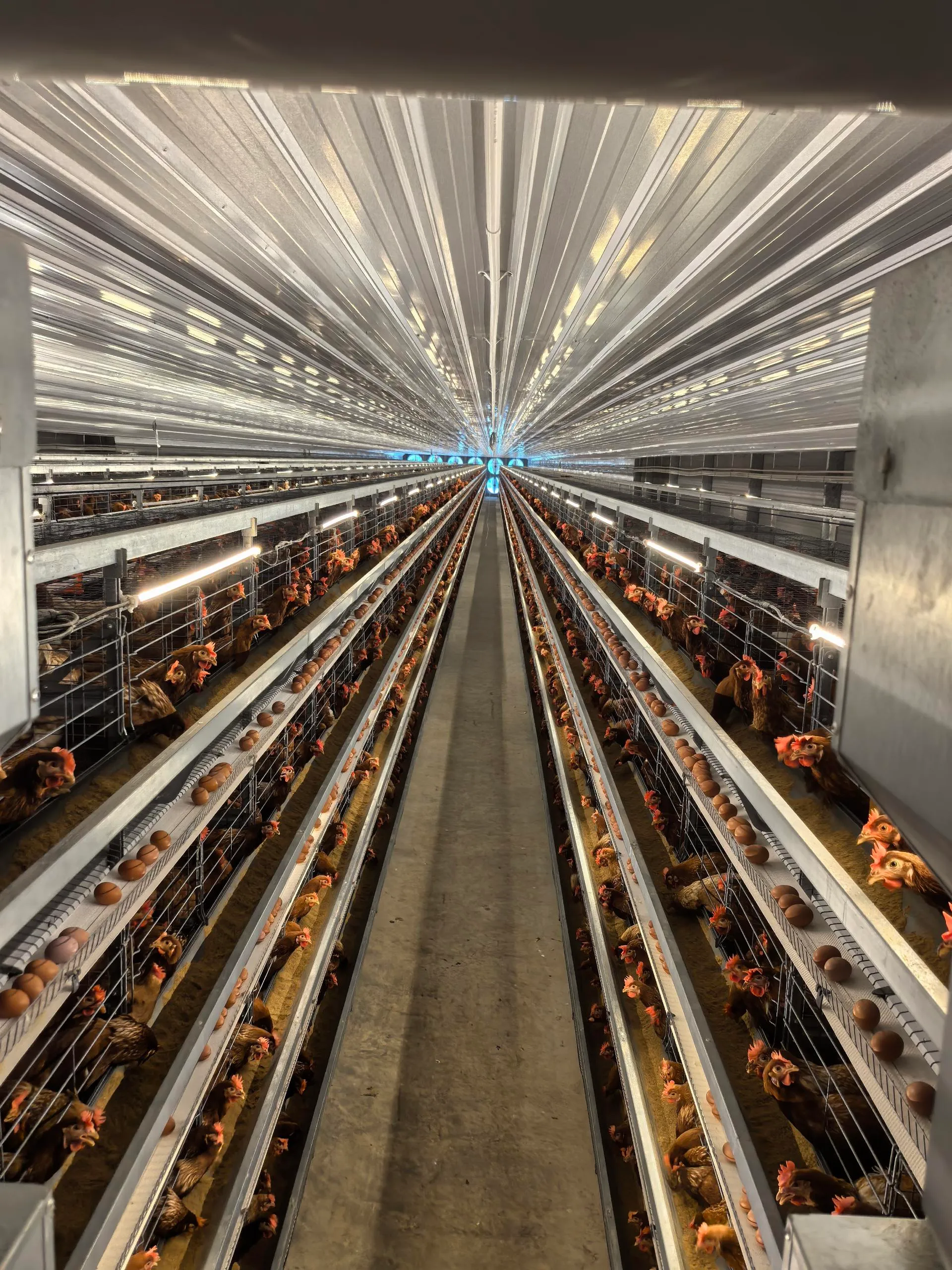
O nome mais abrangente é gaiola para aves de capoeira. Em termos simples, isso significa uma gaiola usada para alojar aves de criação em um sistema confinado e controlado. Em termos práticos para fornecedores, gaiola para galinhas Também é comum. A Big Herdsman usa termos gerais e específicos em suas páginas sobre aves e descrições de produtos.
Essa formulação genérica é útil no início de uma conversa, mas não é específica o suficiente para um projeto real. Um comprador que pede apenas uma "gaiola para aves" ainda pode precisar esclarecer se o sistema é para poedeiras, frangas ou reprodutoras, e se a estrutura é do tipo A, tipo H, estilo bateria ou algo diferente.
A gaiola da bateria é o termo comercial tradicional para um sistema de alojamento em gaiolas, dispostas em fileiras e níveis repetidos, para aves, especialmente galinhas poedeiras. A página da Big Herdsman sobre gaiolas de bateria usa a expressão Sistemas automáticos de gaiolas de bateria para avicultura e descreve esses sistemas como adequados para galinhas poedeiras e frangas.
Fontes acadêmicas e políticas usam o termo da mesma maneira. A UC Davis observa que As gaiolas convencionais também são chamadas de gaiolas para baterias. e os descreve como o sistema mais comum usado para a produção comercial de ovos nos Estados Unidos.
Na maioria das discussões sobre sistemas comerciais de criação de galinhas poedeiras, sim. Os termos são frequentemente usados como sinônimos para o formato padrão mais antigo de gaiolas para galinhas poedeiras. A UC Davis afirma explicitamente que as gaiolas convencionais também são chamadas de gaiolas de bateria, e os relatórios da NCSU sobre postura também usam a expressão. gaiolas de bateria convencionais.
Dito isso, o contexto ainda importa. Em uma conversa com fornecedores, "gaiola de bateria" pode soar mais voltado para o produto, enquanto "gaiola convencional" pode soar mais técnico ou relacionado a políticas. Mas na maioria das conversas sobre avicultura comercial, ambos os termos apontam para a mesma ideia básica de alojamento em gaiolas.
Na linguagem do fornecedor, gaiola para aves de capoeira é um termo genérico que engloba gaiolas para poedeiras, gaiolas para frangas, gaiolas para reprodutoras e sistemas de gaiolas de bateria, dependendo do tipo de ave e do escopo do projeto. As páginas de produtos da Big Herdsman demonstram isso claramente, utilizando nomes de produtos específicos dentro da categoria mais ampla de equipamentos para avicultura.
Por isso, o comprador não deve se limitar ao termo genérico. Se a cotação mencionar "gaiola para aves", a próxima pergunta deve ser: Para qual ave, qual etapa e qual nível de automação? É aí que uma ideia geral de produto se transforma em uma solução habitacional real.
A sistema de gaiolas de proteção É um termo de projeto mais específico e moderno. A Big Herdsman o define como um sistema estruturado de gaiolas para galinhas, projetado para a criação de galinhas poedeiras de forma organizada, higiênica e eficiente, com alimentação, bebedouros, remoção de dejetos e coleta de ovos integrados ao sistema.
Assim, embora “gaiola de bateria” possa descrever o estilo da gaiola, sistema de gaiolas de proteção Geralmente descreve toda a estrutura comercial envolvida. Isso torna o termo mais adequado quando os compradores discutem layout, automação, produtividade e gestão da fazenda a longo prazo, em vez de apenas a estrutura da gaiola em si.
Sim. Os nomes das gaiolas costumam mudar de acordo com a finalidade da ave. A Big Herdsman possui linhas de produtos separadas para cada tipo de ave. sistema de gaiolas para frangas e gaiola para reprodutoras de postura, demonstrando que o período de confinamento está intimamente ligado à fase de produção e ao objetivo da exploração agrícola.
Assim, uma gaiola para aves jovens pode ser chamada de sistema de gaiolas para frangas, Enquanto uma gaiola para matrizes pode ser chamada de gaiola de reprodução. Usar o nome correto ajuda os compradores a evitar encomendar o modelo errado para o lote errado.
Porque os compradores fazem perguntas de diferentes perspectivas. Alguns perguntam pelo tipo de ave. Outros, pelo estilo de alojamento. Outros ainda, pelo objetivo do projeto. Os fornecedores respondem com nomes diferentes para se adequarem a esses pontos de vista. É por isso que a Big Herdsman usa termos como sistema de gaiolas de bateria, sistema de gaiolas para poedeiras, sistema de gaiolas para frangas e gaiolas para reprodutoras em diferentes páginas.
Isso não é apenas linguagem de marketing. É uma maneira prática de refinar o projeto. Uma granja de frangas, uma granja de galinhas poedeiras para consumo e um projeto de matrizes podem usar sistemas de confinamento, mas não utilizam exatamente a mesma configuração de gaiolas.
Devem perguntar se é para poedeiras ou frangas, se é do tipo A ou outro layout, qual a automação incluída e como a alimentação, a água e a remoção de dejetos são integradas. A página da Big Herdsman sobre gaiolas de bateria afirma que seus sistemas são compatíveis com sistemas automáticos de alimentação, água e remoção de dejetos por esteira, sendo adequados para granjas comerciais de médio e grande porte.
Isso significa que o termo “gaiola de bateria” por si só não fornece informações suficientes. Um orçamento completo deve especificar o layout, a categoria de aves, o padrão dos materiais e os sistemas de suporte. Uma gaiola moderna sistema de gaiola de bateria Muitas vezes é muito mais do que apenas fileiras de gaiolas.
| Nome | Significado usual |
|---|---|
| Gaiola para aves | Termo geral e amplo para gaiolas usadas para abrigar aves. |
| Gaiola para galinhas | Outro termo prático amplo |
| gaiola da bateria | Termo comercial comum para alojamento convencional de galinhas em gaiolas |
| gaiola convencional | Termo técnico ou político frequentemente usado como sinônimo de gaiola de bateria |
| Sistema de gaiolas para poedeiras | Solução completa para alojamento de aves em camadas com sistemas integrados |
Essa comparação reflete a linguagem utilizada pelos fornecedores da Big Herdsman e a terminologia de habitação comercial usada pela UC Davis e pela NCSU.
Quanto mais o termo for orientado a projetos, maior a probabilidade de se referir a um sistema operacional completo em vez de um simples produto. As páginas da Big Herdsman sobre gaiolas para poedeiras e sistemas integrados apresentam o alojamento em gaiolas como parte de um fluxo de trabalho de produção mais amplo, que envolve alimentação, fornecimento de água, remoção de dejetos, manuseio de ovos e controle ambiental.
É por isso que os compradores que planejam uma nova casa ou um projeto de ampliação muitas vezes passam rapidamente de “qual o nome da gaiola?” para “como o sistema funciona?”. Nesse ponto, termos como produção de ovos Equipamentos ou soluções integradas para avicultura tornam-se mais relevantes do que apenas o nome básico do produto.
Porque nomes corretos evitam suposições errôneas. Se um comprador pede gaiola para aves, mas precisa de uma solução para matrizes, o layout, a capacidade de produção e o pacote de equipamentos podem estar incorretos. Se um comprador pede gaiola de bateria, mas na verdade deseja um projeto mais automatizado para poedeiras, o orçamento pode ser muito restrito.
Usar a terminologia correta ajuda os fornecedores a planejar a estrutura ideal, o fluxo de trabalho adequado e o sistema de suporte correto. Esse é um dos motivos pelos quais muitas fazendas B2B preferem trabalhar com fornecedores que entendem toda a gama de processos. produção avícola sistemas em vez de apenas vender hardware de metal.
O nome genérico é gaiola para aves de capoeira ou gaiola para galinhas.
O termo específico mais comum é gaiola da bateria, frequentemente também chamado gaiola convencional.
Não exatamente. "Battery cage" descreve o estilo da gaiola, enquanto "layer cage system" geralmente se refere à configuração completa de alojamento comercial com sistemas integrados.
Porque nomes diferentes refletem diferentes estágios de desenvolvimento das aves, estilos de alojamento e escopos de projeto.
 English English
  Spanish
 French
 Russian
 Portuguese
 Arabic
 Chinese
 German
 Italian
 Japanese
 Korean
 Turkish
 Vietnamese
 Thai
Thai
 Dutch
Dutch
 Polish
 Indonesian
 Hindi
Hindi
 Bengali
 Urdu
Urdu