Many poultry farms know they need cages, but they do not always know which type actually fits their project. Choosing the wrong structure can create years of extra labor, poor space use, and weak automation. The right cage type makes the whole farm easier to run and expand.
The most common poultry cage types in commercial farming include layer cages, pullet cages, breeder cages, A-type cages, H-type cages, conventional battery cages, and enriched or furnished cages. Each one serves a different management goal, automation level, and production stage, so the best option depends on the birds you raise and the type of farm you are building.
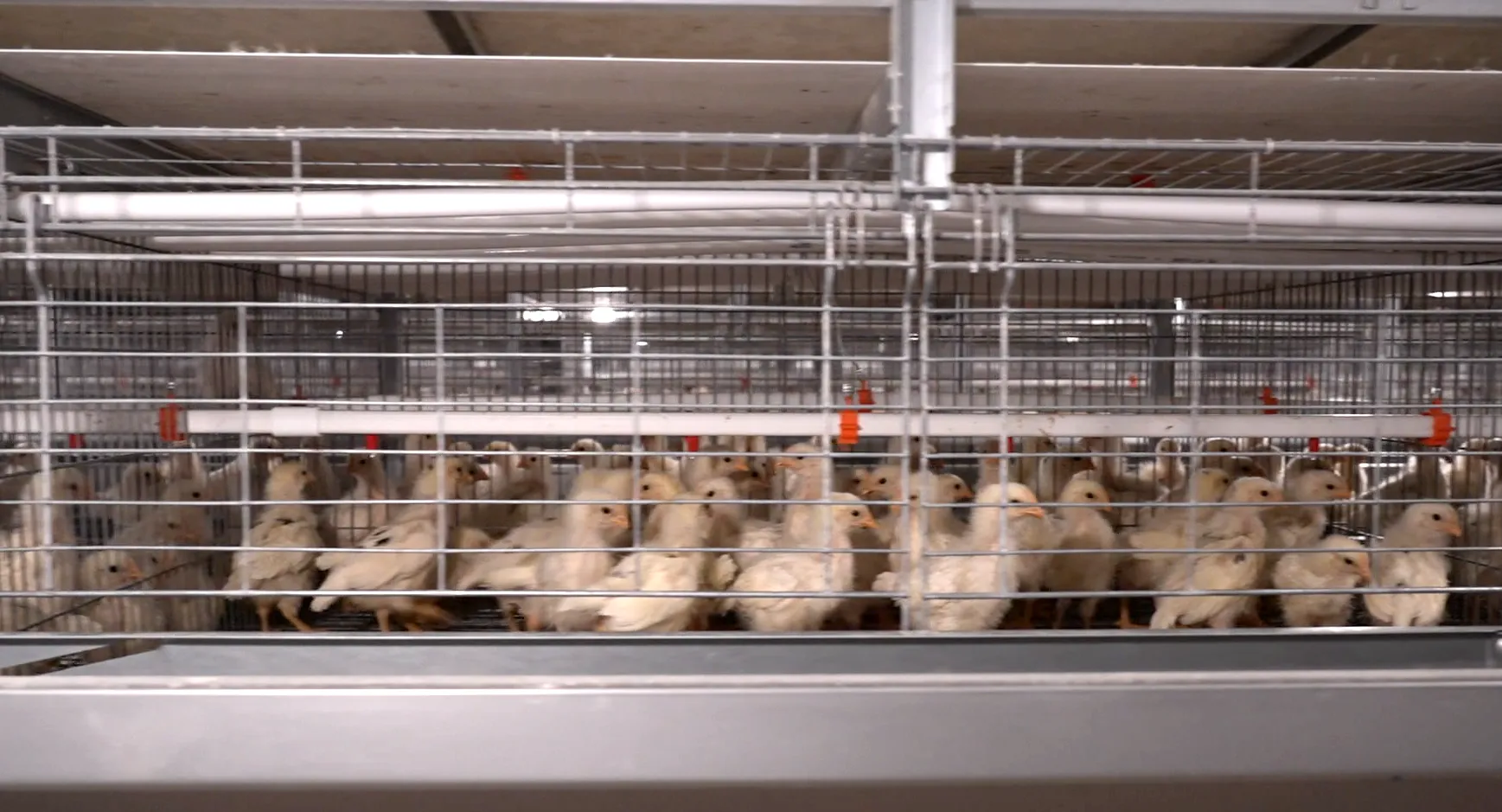
Poultry cages are usually classified in two ways: by production purpose and by structural layout. By purpose, the main commercial categories are layer cages, pullet cages, and breeder cages. By structure, buyers most often compare A-type and H-type layouts, while broader industry discussions also refer to conventional battery cages and enriched or furnished cages.
That is why the question “what type of poultry cage do I need?” cannot be answered with one word. A cage for growing pullets is different from a cage for laying hens, and a breeder cage is different again because it is designed around fertilization and breeder management. Big Herdsman’s product structure makes this distinction clear across its sistema de jaulas por capas, sistema de jaulas para pollitasy Jaula para gallinas ponedoras pages.
A layer cage is designed for laying hens in egg-production houses. Big Herdsman describes its layer cage as a high-density poultry housing system built for efficient egg production, with automated egg collection, manure cleaning, and climate control.
This type is the most familiar commercial poultry cage because it sits at the center of modern egg operations. The design focuses on orderly housing, stable egg flow, lower breakage, and practical automation. For many corporate buyers, the layer cage is the starting point of a broader producción de huevos project rather than a stand-alone product.
A pullet cage is used for rearing young hens before they enter laying houses. Big Herdsman’s pullet cage page says it is a multi-tier system specifically designed for pullets and integrates feeding, drinking, manure cleaning, lighting, environmental control, and IoT modules to support uniform pullet growth.
This matters because poor pullet development creates weak flock uniformity later. A cage type that is ideal for egg production is not automatically ideal for pullet development. Buyers planning multi-stage projects should treat pullet housing as its own technical decision, not just a smaller version of a layer system.
A breeder cage is designed for breeding flocks rather than ordinary table-egg production. Big Herdsman describes its breeder cage as a system aimed at improving fertilization rates, stable egg collection, and lower breakage, with a large-cage design, male allocation, adjustable drinking lines, and real-time climate and alarm monitoring.
That makes breeder cages different from standard layer cages. In breeder projects, the cage must support bird management in a way that protects fertility, egg quality, and operational stability. For buyers serving hatching-egg operations, a Jaula para gallinas ponedoras is a specialist system, not just another layer house layout.
An A-type cage is a stepped, offset cage structure that looks like the letter “A” in cross-section. Big Herdsman’s A-type article explains that this layout allows manure to fall directly into a pit or onto dropping boards below, which simplifies structure and often lowers initial investment compared with H-type systems.
Big Herdsman’s own product and blog content positions the Jaula para ponedoras Tipo A as a practical, cost-effective solution, often suitable for smaller to medium-scale farms, high-temperature areas, or projects that want reliable output with moderate automation.
An H-type cage is a vertically stacked structure that supports denser layouts and stronger automation. Big Herdsman’s cage-selection content says H-type systems are more common in larger, highly automated projects and are often chosen where higher-capacity control and easier integration with automatic systems are priorities.
In commercial terms, H-type cages are usually associated with bigger farms, more automation, and tighter space use. They often make more sense where the buyer wants deeper integration with egg collection, manure removal, and high-capacity daily management.
| Tipo jaula | Main structure | Typical fit | Main strength |
|---|---|---|---|
| Tipo A | Stepped, offset tiers | Small to medium farms | Simpler structure, lower initial investment |
| tipo H | Vertical stacked tiers | Large automated farms | Higher density and automation potential |
This comparison reflects Big Herdsman’s recent articles and cage-selection guidance.

A conventional battery cage is the traditional compact cage arrangement used in commercial egg production. Purdue’s hen housing overview says conventional cages typically house four to nine hens, and NCBI’s laying-hen review explains that conventional cage housing became widespread because it supported larger flock sizes and more automation.
In practical farm language, many buyers still use “battery cage” as a broad term for conventional commercial layer cages. Big Herdsman’s own recent layer-cage guide lists “battery cage” among the common layer cage types and describes it as compact and efficient.
An enriched or furnished cage is a cage system designed to address some welfare concerns associated with conventional cages. Hy-Line’s commercial layers guide says enriched cages provide more space plus devices such as perches, nest boxes, scratch areas, and abrasive pads, while the NCBI review identifies furnished cages as an accepted alternative to conventional cages in some regulatory systems.
This type is important because it shows that “poultry cage” does not mean only one housing style. Buyers serving markets with specific welfare or regulatory requirements may need to compare conventional, enriched, and non-cage systems carefully before finalizing a project.
Buyers should choose by asking three practical questions: what bird am I raising, how automated does the farm need to be, and what scale am I building for? If the project is about growing young hens, a pullet cage is the logical fit. If it is a table-egg project, the choice may be between A-type and H-type layer systems. If it is a breeding operation, breeder cages become more relevant.
They should also consider climate, labor, manure strategy, and house width. Big Herdsman’s cage content repeatedly ties cage choice to house size, automation level, labor costs, expansion plans, and practical management needs. That is also why sistema de climatización de naves avícolas planning should be considered early in the selection process.
A-type cages are often a strong match for farms that want balanced investment and practical operation. H-type systems usually fit large-scale automated farms better. Layer cages fit egg production, pullet cages fit rearing, and breeder cages fit breeding projects. Conventional and enriched cages are broader housing categories that reflect different management and market requirements.
For overseas corporate buyers, the best answer is usually not “which cage is the cheapest?” but “which cage type protects my long-term operating model?” That is why many buyers compare cage options together with equipos para granjas avícolas planning instead of making the decision from a single product photo or quotation sheet.
The main commercial types are layer cages, pullet cages, breeder cages, A-type cages, H-type cages, conventional battery cages, and enriched or furnished cages.
A-type cages have stepped rows and often lower initial investment, while H-type cages use vertical stacking and are usually chosen for larger, more automated farms.
No. Layer cages focus on egg production, while breeder cages are built to support breeding management and fertilized egg production.
It is a cage system with added space and features such as perches, nest boxes, and scratch areas to address some welfare concerns linked to conventional cages.
H-type layer cages are often preferred for large automated projects because they support denser layouts and easier system integration.
 English English
  Spanish
 French
 Russian
 Portuguese
 Arabic
 Chinese
 German
 Italian
 Japanese
 Korean
 Turkish
 Vietnamese
 Thai
Thai
 Dutch
Dutch
 Polish
 Indonesian
 Hindi
Hindi
 Bengali
 Urdu
Urdu