Une croissance irrégulière des volailles, une mauvaise qualité de l'air, des conditions d'élevage humides et des coûts de main-d'œuvre élevés peuvent réduire silencieusement les bénéfices des élevages de poulets de chair. Pour les élevages avicoles commerciaux, le droit équipement pour poulailler Il ne s'agit pas seulement d'acheter des machines. Il s'agit de créer un environnement de production stable où les volailles grandissent plus vite, en meilleure santé et de façon plus uniforme.
L'équipement d'un poulailler comprend des systèmes d'alimentation, des systèmes d'abreuvement, des ventilateurs, des panneaux de refroidissement, des chauffages, des entrées d'air, un éclairage, des systèmes de cages pour poulets de chair, des équipements d'élevage au sol, des systèmes de gestion du fumier et des régulateurs environnementaux. Lorsque ces systèmes sont conçus conjointement, les élevages de poulets de chair peuvent améliorer les performances de croissance, réduire la main-d'œuvre et maintenir un poulailler plus propre.
L'élevage de poulets de chair est très sensible à l'environnement et aux pratiques d'élevage. Les volailles grandissent rapidement ; par conséquent, de petits problèmes d'alimentation, d'approvisionnement en eau, de température ou de ventilation peuvent affecter tout un lot.
Un poulailler n'est pas qu'un simple bâtiment. C'est un espace de production contrôlé. Chaque système à l'intérieur doit contribuer au bien-être des volailles : alimentation adéquate, eau propre, air frais, confort et croissance harmonieuse.
Pour les exploitations agricoles qui envisagent un nouveau projet, travailler avec un fournisseur de systèmes comme Grand berger permet de faire le lien entre le choix des équipements et l'agencement du poulailler, les conditions climatiques, la capacité de production et les objectifs d'automatisation.

Un élevage de poulets de chair commercial nécessite généralement plusieurs systèmes interconnectés. Ces systèmes ne doivent pas être choisis séparément sans tenir compte de la conception globale du bâtiment.
| Type d'équipement | Fonction principale |
|---|---|
| Système d'alimentation | Distribue l'aliment de façon uniforme et réduit le gaspillage. |
| Système d'abreuvement | Fournit de l'eau propre à pression stable |
| Équipement de ventilation | Contrôle le flux d'air, l'humidité et la qualité de l'air |
| Coussins de refroidissement | Réduire le stress thermique dans les climats chauds |
| Chauffages | Maintenir les jeunes oiseaux au chaud pendant la couvaison |
| Système d'éclairage | Soutient l'activité alimentaire et le rythme de gestion |
| cage à poulets de chair ou système au sol | Organise la croissance des oiseaux et l'aménagement du nid |
| Équipement de manutention du fumier | Contribue à maintenir des conditions domestiques plus propres |
| contrôleur environnemental | Surveille et ajuste les équipements de la maison |
Pour les exploitations agricoles qui ont besoin d'un plan de production complet, systèmes de production avicole peut contribuer à intégrer l'alimentation, l'abreuvement, la ventilation, l'éclairage et la régulation climatique dans une solution pratique unique.
L'alimentation représente l'un des postes de dépenses les plus importants en élevage de poulets de chair. Si elle n'est pas distribuée uniformément, certains oiseaux grandissent plus vite que d'autres. Il en résulte une faible homogénéité du lot et une réduction de la valeur de production finale.
Un système d'alimentation moderne pour poulets de chair peut comprendre des silos à aliments, des lignes de distribution, des mangeoires, des distributeurs automatiques et des dispositifs de contrôle. L'objectif est simple : chaque volaille doit avoir un accès constant à l'alimentation.
Un bon équipement d'alimentation permet aux élevages de réduire le gaspillage d'aliments, de diminuer la charge de travail et d'améliorer l'homogénéité de la croissance. Dans les grands poulaillers, l'alimentation automatique est souvent plus fiable que l'alimentation manuelle car elle permet un contrôle plus précis du moment et de la distribution.
L'eau propre est essentielle à la santé des poulets de chair. Une mauvaise gestion de l'eau peut entraîner une litière humide, une humidité excessive, des conditions d'élevage insalubres et une augmentation des risques de maladies.
Une fiabilité système d'abreuvement Ce système permet de fournir de l'eau propre grâce à des abreuvoirs à tétine. Comparés aux systèmes d'abreuvement classiques, les abreuvoirs à tétine réduisent la contamination et contribuent à maintenir le poulailler plus sec.
Un bon système d'abreuvement pour poulets de chair doit offrir une pression d'eau stable, un faible risque de fuite, un réglage facile de la hauteur de la conduite et un accès aisé pour l'entretien. La hauteur de la conduite d'eau doit être adaptée à l'âge des volailles, car les poulets de chair grandissent rapidement et leur position d'abreuvement évolue tout au long du cycle de production.
La ventilation est un élément essentiel des équipements d'élevage de poulets de chair. Les volailles ont besoin d'oxygène, d'une température stable, d'une humidité contrôlée et d'un faible taux d'ammoniac. Une mauvaise ventilation peut rapidement entraîner un stress thermique ou des problèmes respiratoires.
Un système de ventilation complet peut comprendre des ventilateurs, des entrées d'air, des panneaux de refroidissement, des rideaux, des radiateurs, des régulateurs et des portes de panneaux. solutions de contrôle environnemental sont conçues pour faciliter le contrôle du flux d'air, la régulation de la température et une meilleure stabilité des poulaillers.
Une bonne ventilation est bénéfique aux élevages de poulets de chair :
Dans les régions chaudes, la conception de la ventilation et du refroidissement est primordiale. Dans les régions plus froides, les exploitations agricoles ont besoin d'un renouvellement d'air équilibré, sans courants d'air froids.
Les poulets de chair sont sensibles aux variations de température. Les jeunes volailles ont besoin de chaleur, tandis que les plus âgées sont plus vulnérables au stress thermique. C'est pourquoi la maîtrise du climat est un facteur déterminant pour la performance des élevages de poulets de chair.
Les panneaux rafraîchissants permettent de réduire la température de l'air entrant par temps chaud. Les chauffages aident à maintenir une température optimale pour l'incubation des œufs en début de croissance. Les systèmes de contrôle environnemental coordonnent les ventilateurs, les panneaux rafraîchissants, les chauffages, l'éclairage et les alarmes.
A porte à panneaux Elles peuvent également améliorer l'étanchéité, l'isolation et la régulation de la circulation de l'air. Associées à des ventilateurs et des panneaux de refroidissement, les portes à panneaux permettent de maintenir un environnement plus stable dans le poulailler, tout en réduisant le gaspillage d'énergie.

Certaines exploitations optent pour l'élevage en cage afin d'optimiser l'espace et de mieux structurer la gestion des volailles. Un système de cages pour poulets de chair permet une alimentation et un abreuvement organisés, ainsi que des inspections et la gestion des déjections.
Le grand berger systèmes de cages à poulets de chair elles conviennent aux exploitations agricoles qui ont besoin d'options d'automatisation pratiques et d'une meilleure utilisation des poulaillers.
Les systèmes de cages pour poulets de chair peuvent aider les exploitations agricoles :
Lors de la planification des cages à poulets de chair, les exploitations agricoles doivent tenir compte de la largeur du bâtiment, de la direction de la ventilation, de la méthode de sortie des volailles, de l'agencement de la ligne d'alimentation et de l'accès pour le nettoyage.
L’élevage au sol reste courant dans de nombreux élevages de poulets de chair. Il offre aux exploitations une grande flexibilité d’aménagement et peut donner de bons résultats lorsque l’alimentation, l’abreuvement, la ventilation, le chauffage, l’éclairage et la gestion de la litière sont correctement planifiés.
Le grand berger solutions d'élevage au sol pour poulets de chair peut soutenir les exploitations agricoles qui privilégient l'élevage de poulets de chair au sol.
Un système d'élevage au sol doit garantir un accès uniforme à l'alimentation, de l'eau potable propre, une litière sèche, une température stable, un éclairage adéquat et une ventilation optimale. Le système doit également être facile à nettoyer entre les lots.
Le choix entre l'élevage en cages et l'élevage au sol doit dépendre de la taille de l'exploitation, du climat, du style de gestion, de la disponibilité de la main-d'œuvre et des objectifs de production à long terme.
Des conditions d'élevage propres sont essentielles à la performance des poulets de chair. Le fumier et la litière humide peuvent augmenter les taux d'ammoniac, les odeurs, l'humidité et le risque de maladies. Si les déchets ne sont pas bien gérés, même un bon équipement d'alimentation et de ventilation ne peut garantir des résultats optimaux.
Pour les exploitations agricoles qui ont besoin d'un transport efficace des déchets, un convoyeur à fumier extérieur peut contribuer à évacuer le fumier du poulailler vers les zones de stockage ou de traitement.
Une meilleure gestion du fumier contribue à un air plus sain, un nettoyage plus facile, une réduction du travail manuel et une biosécurité accrue. Elle doit toujours être planifiée en même temps que la ventilation et l'aménagement du bâtiment.
L'éclairage influe sur le comportement, l'activité, l'alimentation, le repos et la gestion de l'élevage des poulets de chair. Un éclairage inégal peut entraîner une répartition inégale des volailles, tandis qu'un mauvais contrôle de la lumière peut affecter leur activité alimentaire.
Un bon système d'éclairage pour poulets de chair doit être économe en énergie, facile à contrôler, uniformément réparti et adapté aux conditions d'un élevage de volailles.
L'éclairage ne doit pas être considéré comme un simple accessoire. Il doit être adapté aux horaires d'alimentation, à l'âge des volailles, à la conception du système de ventilation et au plan de gestion de l'exploitation.
Dans les élevages de poulets de chair modernes, on utilise de plus en plus des systèmes de contrôle environnemental afin de réduire les interventions manuelles. Au lieu que les employés vérifient et modifient le matériel toute la journée, ces systèmes gèrent les ventilateurs, les panneaux de refroidissement, les chauffages, l'éclairage et les alarmes en fonction des conditions du bâtiment.
Les systèmes de contrôle intelligents aident les exploitations agricoles à s'améliorer :
Pour les grandes exploitations, cela réduit les erreurs humaines et aide les gestionnaires à se concentrer davantage sur la santé du troupeau et les performances de production.
Le meilleur équipement pour un poulailler n'est pas toujours le moins cher. Il s'agit de choisir l'équipement adapté à la conception du bâtiment, au climat, à la capacité d'élevage, à la main-d'œuvre disponible et aux objectifs de production de l'exploitation.
Avant de choisir leur matériel, les exploitants agricoles doivent vérifier :
| Point de planification | Pourquoi est-ce important ? |
|---|---|
| Capacité en oiseaux | Détermine la quantité d'équipement et l'agencement de la maison |
| Dimensions de la maison | Influe sur la conception de l'alimentation, de l'abreuvement et de la ventilation |
| Climat local | Détermine les besoins en matière de refroidissement, de chauffage et d'isolation |
| Méthode d'élevage | L'élevage en cage ou au sol modifie la configuration de l'équipement |
| disponibilité de la main-d'œuvre | Détermine le niveau d'automatisation |
| Plan de nettoyage | Affecte la manipulation et l'hygiène du fumier |
| Plan d'expansion | Contribue à éviter une refonte future |
Un fournisseur professionnel devrait poser ces questions avant de recommander du matériel. C'est ce qui distingue la vente de produits de la conception d'un système agricole fonctionnel.
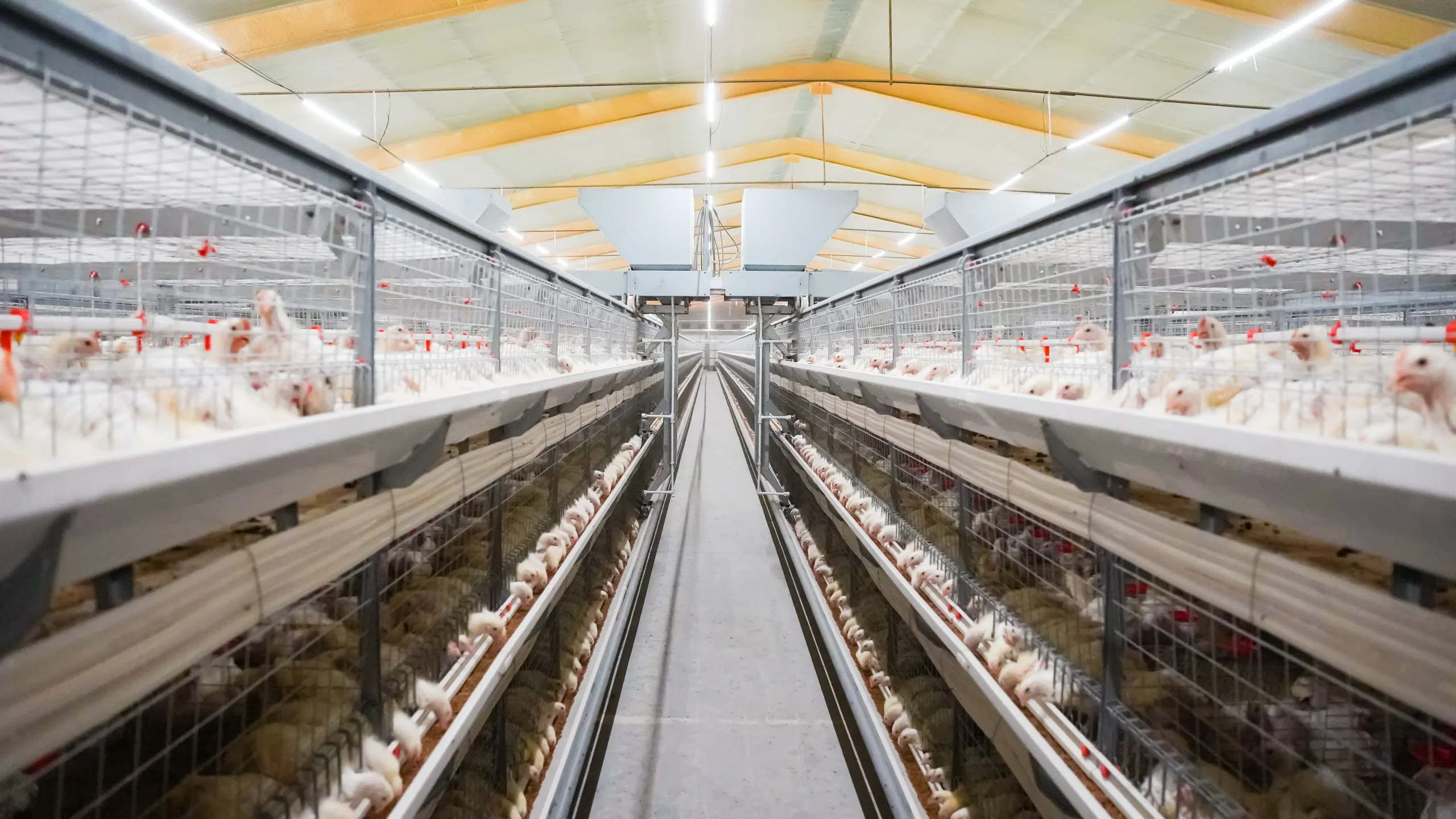
L'équipement d'un poulailler doit fonctionner comme un système intégré. L'alimentation, l'abreuvement, la ventilation, le refroidissement, le chauffage, l'éclairage et la gestion du fumier sont tous interdépendants. Un mauvais agencement de ces éléments peut entraîner des problèmes après l'installation.
Big Herdsman se spécialise dans les systèmes complets d'élevage de volailles, intégrant le développement de produits, la fabrication, la conception de systèmes, l'assistance à l'installation et le service après-vente. Pour les acheteurs B2B internationaux, cette approche permet de limiter les inadéquations entre les équipements et de faciliter le déroulement des projets.
Les propriétaires d'exploitations agricoles, les investisseurs en projets agricoles, les entreprises de génie civil et les distributeurs de matériel peuvent nous contacter. L'équipe chargée des équipements avicoles chez Big Herdsman discuter des équipements personnalisés pour les poulaillers en fonction de la taille du bâtiment, du climat, de la capacité cible et des besoins en automatisation.
L'équipement des poulaillers comprend des systèmes d'alimentation, des systèmes d'abreuvement, des ventilateurs, des panneaux de refroidissement, des chauffages, un éclairage, des systèmes d'élevage en cage ou au sol, des équipements de gestion du fumier et des régulateurs environnementaux utilisés dans les poulaillers.
Un élevage de poulets de chair commercial nécessite généralement un système d'alimentation automatique, des lignes d'abreuvement à tétine, des ventilateurs, des panneaux de refroidissement, des chauffages, des systèmes d'éclairage, des régulateurs environnementaux et un équipement d'élevage adapté, en cage ou au sol.
La ventilation contrôle la circulation de l'air, la température, l'humidité et la qualité de l'air. Une bonne ventilation contribue à réduire le stress thermique, l'accumulation d'ammoniac, l'humidité excessive dans les bâtiments et la prolifération des maladies.
Le choix dépend de la taille de l'exploitation, du climat, de la main-d'œuvre disponible, du budget, des objectifs de production et du style de gestion. L'élevage en cages favorise une production organisée, tandis que l'élevage au sol offre une plus grande flexibilité d'aménagement.
Oui. L'équipement des poulaillers peut être personnalisé en fonction des dimensions du bâtiment, de la capacité d'élevage, des conditions climatiques, du niveau d'automatisation, de la méthode d'élevage et des projets d'expansion de l'exploitation.
L'automatisation réduit les tâches répétitives, améliore la régularité de l'alimentation et de l'abreuvement, stabilise le contrôle climatique et aide les exploitations agricoles à gérer plus efficacement une capacité de production plus importante.
Équipement pour poulailler Un élevage de poulets de chair performant a un impact direct sur la vitesse de croissance, l'homogénéité du troupeau, la qualité de l'air, l'hygiène, la productivité du travail et la rentabilité de l'exploitation. Il nécessite bien plus que de simples machines : un système complet intégrant l'alimentation, l'abreuvement, la ventilation, le refroidissement, le chauffage, l'éclairage, la gestion des déjections et un contrôle intelligent.
Pour les élevages avicoles commerciaux, le choix du matériel doit se faire en fonction des conditions réelles du projet, et non uniquement du prix. Big Herdsman propose des équipements intégrés pour l'élevage de volailles et des solutions personnalisées pour les poulaillers de chair aux acheteurs B2B du monde entier, aidant ainsi les exploitations à mettre en place des systèmes de production avicole efficaces, automatisés et évolutifs.
 English English
  Spanish
 French
 Russian
 Portuguese
 Arabic
 Chinese
 German
 Italian
 Japanese
 Korean
 Turkish
 Vietnamese
 Thai
Thai
 Dutch
Dutch
 Polish
 Indonesian
 Hindi
Hindi
 Bengali
 Urdu
Urdu