Une mauvaise circulation de l'air peut nuire silencieusement à la production avicole. Des niveaux élevés d'ammoniac, un excès d'humidité, le stress thermique et une température instable réduisent le confort des volailles et augmentent la pression sur la production. système de ventilation pour volailles aide les élevages de volailles à maintenir des conditions de croissance plus saines, plus propres et plus stables.
Un système de ventilation pour volailles utilise des ventilateurs d'extraction, des entrées d'air, des panneaux de refroidissement, des rideaux, des régulateurs, des éléments chauffants et des portes à panneaux pour réguler le flux d'air, la température, l'humidité et la qualité de l'air à l'intérieur des poulaillers. Il favorise le bien-être des volailles, l'efficacité de la production et la gestion à long terme des élevages avicoles.
La ventilation influe sur presque tous les aspects de la production avicole. Pour bien se développer, les volailles ont besoin d'air frais, d'une température stable, d'une humidité contrôlée et d'un faible taux d'ammoniac.
Sans ventilation adéquate :
Les élevages de volailles modernes dépendent de systèmes de contrôle environnemental afin de maintenir des conditions plus stables tout au long des différentes saisons et sous différents climats.
Un système de ventilation complet pour volailles comprend plusieurs éléments interconnectés.
| Equipement | Fonction principale |
|---|---|
| Ventilateurs d'extraction | Éliminer l'air vicié et la chaleur |
| Entrées d'air | Contrôler l'entrée d'air frais |
| Coussins de refroidissement | Réduire la température de l'air entrant |
| Chauffages | Soutien à la couvaison et aux températures froides |
| Rideaux | Contribuer à réguler le flux d'air |
| Contrôleurs | Automatiser le fonctionnement de la ventilation |
| Portes à panneaux | Améliorer l'isolation et l'étanchéité |
Le système doit être adapté à la taille du poulailler, à la densité des volailles, au climat local et aux objectifs de production.
Les différentes exploitations avicoles utilisent différentes méthodes de ventilation en fonction du climat et de la structure du bâtiment.
La ventilation tunnel utilise de puissants ventilateurs d'extraction et des entrées d'air pour créer un flux d'air rapide et contrôlé à travers le poulailler.
Parmi les avantages, on peut citer :
La ventilation naturelle repose davantage sur les ouvertures latérales, les rideaux et la circulation naturelle de l'air.
Parmi les avantages, on peut citer :
Pour les projets d'élevage de volailles à grande échelle, la ventilation par tunnel est souvent privilégiée car elle offre un meilleur contrôle environnemental.
Les panneaux de refroidissement sont particulièrement importants dans les régions chaudes où la ventilation seule ne suffit pas à abaisser suffisamment la température.
Les panneaux de refroidissement fonctionnent en abaissant la température de l'air entrant avant son entrée dans le poulailler. Associés à une ventilation adaptée et à une conception optimisée du flux d'air, ils contribuent à réduire considérablement le stress thermique.
Les performances du panneau de refroidissement dépendent de :
Les systèmes de refroidissement mal conçus peuvent créer un flux d'air irrégulier ou un excès d'humidité à l'intérieur de la maison.
Les fuites d'air peuvent réduire l'efficacité de la ventilation même avec des ventilateurs puissants.
A porte à panneaux Contribue à améliorer l'isolation et la régulation de la circulation de l'air à l'intérieur des poulaillers. Une meilleure étanchéité permet à l'air frais de circuler selon des circuits prévus à cet effet, au lieu de pénétrer aléatoirement par des interstices.
Cela améliore :
De petits détails de construction ont souvent un impact important sur les performances de ventilation à long terme.
Les élevages de poules pondeuses nécessitent des conditions stables pour une production d'œufs à long terme. La ventilation influe sur le confort des volailles, la propreté des œufs et la gestion quotidienne de l'exploitation.
Un moderne système de cages à étages devraient fonctionner de concert avec les systèmes de ventilation, d'évacuation du fumier, d'alimentation et de collecte des œufs.
Une bonne ventilation est bénéfique aux élevages de poules pondeuses :
Les élevages de poules pondeuses fonctionnent souvent selon de longs cycles de production, ce qui rend la stabilité climatique particulièrement importante.
Les poulets de chair grandissent rapidement, la qualité de l'air et la gestion de la température ont donc un impact direct sur leurs performances de croissance.
Pour systèmes d'élevage au sol pour poulets de chair, La ventilation doit éliminer l'humidité tout en maintenant des températures d'incubation appropriées.
Pour systèmes de cages à poulets de chair, La conception du flux d'air doit tenir compte des rangées de cages, des allées de service et des zones de manutention du fumier.
Une bonne ventilation pour les poulets de chair favorise :
L'efficacité de la ventilation dépend fortement de la gestion du fumier. Une mauvaise gestion du fumier augmente les niveaux d'ammoniac et d'humidité à l'intérieur du poulailler.
Un moderne convoyeur à fumier extérieur permet d'évacuer efficacement le fumier hors du poulailler, améliorant ainsi la qualité de l'air et réduisant les odeurs.
Les systèmes de ventilation et de gestion du fumier doivent toujours être planifiés ensemble.
Les élevages de volailles modernes utilisent de plus en plus de systèmes de contrôle intelligents pour automatiser la gestion de la ventilation.
Les systèmes intelligents permettent de contrôler :
L'automatisation aide les exploitations agricoles à améliorer la régularité de leur production tout en réduisant la pression sur les réglages manuels.
Un système de ventilation pour volailles contrôle le flux d'air, la température, l'humidité et la qualité de l'air à l'intérieur des poulaillers grâce à des ventilateurs, des entrées d'air, des panneaux de refroidissement et des équipements de climatisation.
La ventilation élimine la chaleur, l'humidité, la poussière et les gaz nocifs tout en fournissant de l'air frais aux oiseaux.
La ventilation tunnel utilise des ventilateurs puissants pour faire circuler rapidement l'air dans le poulailler, assurant ainsi un refroidissement plus efficace et un meilleur contrôle du flux d'air.
Dans les climats chauds, les panneaux rafraîchissants contribuent à réduire la température de l'air entrant et à améliorer le confort des oiseaux.
Une mauvaise gestion du fumier augmente les concentrations d'ammoniac et d'humidité, ce qui oblige les systèmes de ventilation à travailler davantage.
Oui. Les systèmes peuvent être personnalisés en fonction du type de volaille, de la taille du bâtiment, des conditions climatiques et du niveau d'automatisation.
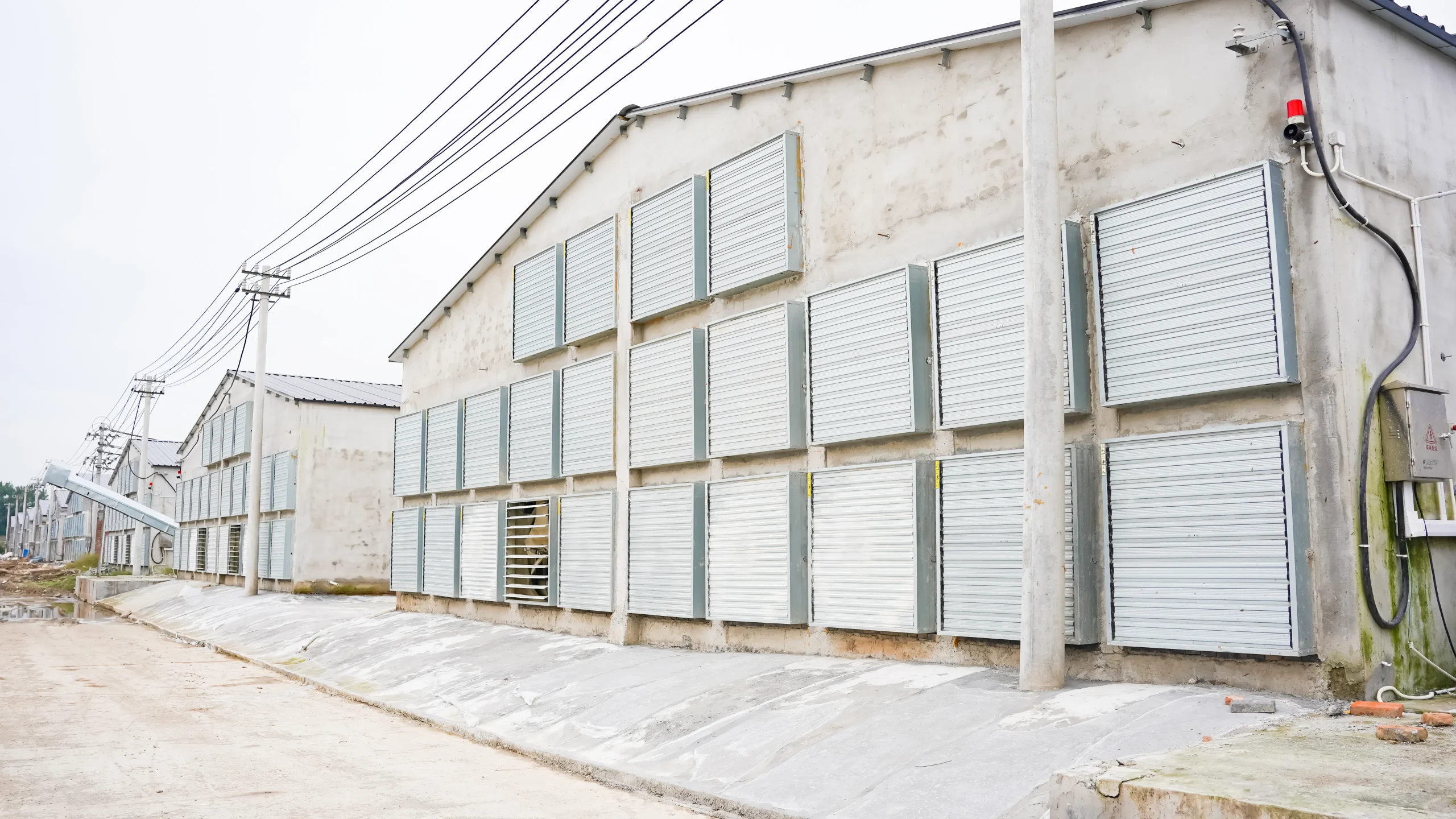
Ventilateur à caisson
 English English
  Spanish
 French
 Russian
 Portuguese
 Arabic
 Chinese
 German
 Italian
 Japanese
 Korean
 Turkish
 Vietnamese
 Thai
Thai
 Dutch
Dutch
 Polish
 Indonesian
 Hindi
Hindi
 Bengali
 Urdu
Urdu