L'élevage de volailles devient coûteux lorsque les volailles, les œufs, l'alimentation et les déchets circulent de manière désorganisée. La main-d'œuvre augmente, l'hygiène se dégrade et le contrôle quotidien se complique. Un système de cages améliore la gestion en transformant le bâtiment d'élevage en un environnement de production plus organisé et dont les résultats sont plus facilement mesurables.
En matière de gestion avicole, un système de cage Il s'agit d'un système structuré d'élevage et de gestion des flux de travail qui maintient les volailles en rangées de cages organisées, tout en intégrant l'alimentation, l'abreuvement, l'évacuation des déjections, la collecte des œufs, l'éclairage et le contrôle climatique au sein d'une seule et même opération. Dans les élevages commerciaux, cette structure permet d'améliorer l'efficacité, l'hygiène et la régularité des productions.
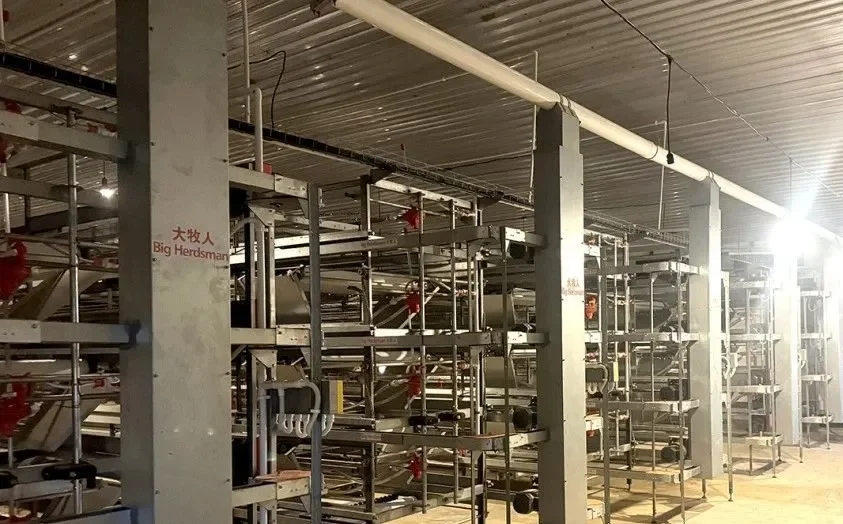
Grand berger
En aviculture, un système de cages ne se limite pas à enfermer des volailles dans des cages. Il s'agit de gérer les oiseaux dans un aménagement structuré facilitant le contrôle de l'alimentation, de l'abreuvement, de la manipulation des œufs et de l'observation. Le guide récent de Big Herdsman sur les cages pour pondeuses définit le système de cages comme une méthode structurée d'élevage de poules en environnement contrôlé, utilisant des unités de cages organisées.
Cette logique de gestion est essentielle aux opérations commerciales. Une fois le troupeau disposé en rangées et en niveaux, il devient plus facile de contrôler la consommation d'aliments, l'état des volailles et les performances du système. C'est pourquoi de nombreuses exploitations avicoles, qui considèrent l'élevage de volailles comme une activité à grande échelle, optent pour l'élevage en cage. production de volaille des systèmes plutôt que des logements peu gérés.
Il facilite la gestion quotidienne en créant des routines répétables. L'article de Big Herdsman sur les cages à poulettes indique qu'un système automatisé de cages à volailles centralise plusieurs fonctions de l'élevage dans un seul flux de travail, notamment l'alimentation, l'abreuvement, l'évacuation du fumier, la ventilation, l'éclairage et la surveillance intelligente.
Ce type de structure permet aux éleveurs de gérer des troupeaux plus importants grâce à des tâches quotidiennes plus claires. Au lieu de devoir gérer des problèmes épars, ils se concentrent sur une chaîne de traitement : distribution de l’alimentation, accès à l’eau, élimination des déchets, contrôle des volailles et gestion des œufs. C’est là tout l’avantage de la gestion par cages.
Un système moderne d'élevage en cage associe généralement l'alimentation, l'abreuvement, la gestion des déjections, la collecte des œufs, l'éclairage et la régulation climatique. Les contenus de Big Herdsman relatifs aux cages pour pondeuses et aux cages pour poulettes présentent ces fonctions interdépendantes comme des éléments essentiels des élevages modernes en cage.
L'article de Big Herdsman sur l'agriculture intégrée affirme que l'élevage de volailles commerciales ne se limite plus à des équipements isolés et que l'alimentation, l'abreuvement, la ventilation, l'éclairage, l'évacuation des déjections et la collecte des œufs doivent être coordonnés. Cette affirmation illustre parfaitement les enjeux de la gestion en cage.
Les élevages de poules pondeuses dépendent d'une gestion stable des œufs, d'une utilisation optimale de l'espace, d'une hygiène irréprochable et d'une main-d'œuvre efficace. Big Herdsman affirme qu'un système de cages pour poules pondeuses améliore la production d'œufs, réduit la main-d'œuvre et facilite l'automatisation de l'alimentation, de l'évacuation du fumier et de la collecte des œufs.
C'est pourquoi de nombreuses exploitations agricoles gèrent des activités commerciales Cage pour poules pondeuses Dans certains projets, le système de cages est considéré comme l'élément central de la conception du bâtiment d'élevage. En matière d'élevage de poules pondeuses, le système de cages ne se limite pas à l'hébergement des poules ; il influence directement la production quotidienne.
Non. La gestion des cages se décline sous différentes formes pour les pondeuses, les poulettes et les reproductrices. Le système pour poulettes de Big Herdsman est conçu pour les jeunes volailles avant la ponte, tandis que les informations concernant les cages pour reproductrices expliquent que ces cages sont conçues pour optimiser la gestion de l'accouplement, le taux de fécondation et la manipulation des œufs en toute sécurité.
Le système de gestion change donc en fonction de la finalité du troupeau. système de cages à poulettes L'un des systèmes d'élevage met l'accent sur l'uniformité de la croissance et le contrôle de l'élevage, tandis que l'autre privilégie le flux d'œufs et la productivité, et le système d'élevage de reproducteurs, la gestion de la reproduction.
Ils ont une incidence quotidienne sur le fonctionnement des bâtiments d'élevage. Le service de vulgarisation agricole de l'Université d'État du Mississippi explique que les systèmes de convoyeurs à fumier éliminent régulièrement le fumier et que la circulation d'air contribue à son séchage et à la réduction de l'ammoniac à proximité des volailles. En termes de gestion, cela se traduit par une meilleure hygiène, un nettoyage facilité et des conditions d'élevage plus stables.
C’est pourquoi la gestion des cages doit toujours être liée à Contrôle de l'environnement. Le contenu de Big Herdsman sur l'agriculture intégrée met en avant la ventilation, les ventilateurs, les panneaux de refroidissement et les contrôleurs comme des éléments essentiels d'une gestion stable des élevages de volailles commerciaux.
La gestion manuelle des cages repose davantage sur le personnel pour l'alimentation, la manipulation des œufs et la surveillance. La gestion automatisée des cages confie ces tâches à des systèmes mécaniques et de contrôle. L'article de Big Herdsman sur l'automatisation indique que les systèmes d'automatisation avicole combinent équipements, capteurs, contrôleurs et logiciels pour automatiser les tâches clés dans les élevages de volailles.
Ce changement est important car la valeur du système d'élevage en cages augmente avec l'automatisation. Un agencement simple des cages peut être utile, mais un système automatisé de gestion des cages garantit une plus grande constance dans la main-d'œuvre, la collecte des œufs et le contrôle environnemental.
| Fonction de gestion | Comment le système de cage aide |
|---|---|
| Alimentation | Répartition plus uniforme entre les rangées |
| Consommation d'alcool | Accès stable à l'eau grâce aux buveurs |
| manipulation des œufs | Collecte plus propre et plus rapide |
| Contrôle des déchets | Enlèvement régulier du fumier |
| surveillance des oiseaux | Inspection visuelle et regroupement facilités |
| Soutien climatique | Meilleur contrôle du flux d'air et de la température |
Cela reflète les descriptions de Big Herdsman concernant les cages pour pondeuses, les cages pour poulettes et l'agriculture intégrée, ainsi que les conseils de gestion du fumier de l'Université d'État du Mississippi.
Il convient de vérifier le type de volaille, la taille du bâtiment, le niveau d'automatisation, la stratégie de gestion du fumier, les exigences climatiques et le plan d'expansion à long terme. Les pages de Big Herdsman consacrées aux cages en batterie et aux systèmes intégrés décrivent ces systèmes comme adaptés aux exploitations de moyenne et grande taille, avec un accompagnement technique, la conception de l'aménagement, l'installation et la mise en service.
Un acheteur doit également se demander si le système est compatible avec le flux de travail quotidien spécifique de l'exploitation. Dans de nombreux projets B2B, la meilleure solution n'est pas seulement la ligne de cages la moins chère, mais la plus robuste. production d'oeufs système de gestion au fil du temps.
Car elles réduisent les inadéquations. L'article de Big Herdsman sur l'agriculture intégrée indique que les exploitations modernes privilégient de plus en plus les solutions agricoles complètes plutôt que d'acheter du matériel auprès de nombreux fournisseurs différents. Il s'agit d'un avantage tant en termes de gestion que d'achat.
Lorsque les systèmes de logement, d'alimentation, d'abreuvement, d'évacuation des déjections et de climatisation sont conçus de manière intégrée, la gestion quotidienne des volailles devient plus fluide et plus adaptable. C'est particulièrement important pour les exploitations qui envisagent d'agrandir leurs bâtiments ou d'uniformiser leurs pratiques.
Un fournisseur compétent optimise la gestion des volailles en adaptant le système de cages aux contraintes réelles de l'exploitation, au climat et aux objectifs de production. Big Herdsman se positionne comme un fournisseur de systèmes personnalisés couvrant le logement, l'alimentation, la ventilation, la collecte des œufs, l'évacuation du fumier et l'automatisation.
C’est pourquoi une bonne gestion de la volaille ne se limite pas aux soins apportés aux animaux. Elle concerne également la conception du système. Un fournisseur qui maîtrise l’ensemble de la chaîne de valeur est essentiel. matériel d'élevage de volailles peut généralement offrir une solution de gestion des cages plus efficace sur le long terme.
Il s'agit d'un système structuré d'hébergement et de flux de travail qui utilise des cages ainsi que des systèmes reliés pour l'alimentation, l'abreuvement, l'élimination du fumier, la collecte des œufs et le contrôle climatique.
Parce que cela permet d'organiser le travail, d'améliorer l'hygiène et de rendre la production plus régulière.
Non. Il est également utilisé pour les poulettes et les reproducteurs, avec des modèles différents pour différents objectifs d'élevage.
L’alimentation, l’abreuvement, l’élimination du fumier, la collecte des œufs et le contrôle de l’environnement constituent les principaux systèmes interconnectés.
 English English
  Spanish
 French
 Russian
 Portuguese
 Arabic
 Chinese
 German
 Italian
 Japanese
 Korean
 Turkish
 Vietnamese
 Thai
Thai
 Dutch
Dutch
 Polish
 Indonesian
 Hindi
Hindi
 Bengali
 Urdu
Urdu