High chick mortality, uneven growth, and poor hygiene often begin in the first weeks of life. When brooding conditions are weak, the whole flock pays for it later. A well-designed chick brooder cage gives farms better heat, cleaner management, and a stronger start.
A cage d'élevage pour poussins is a specialized poultry rearing system for baby chicks during the early growth stage. In modern poultry farming, it usually combines brooder heat, ventilation, feeding, drinking, and waste handling in one controlled structure to improve survival, growth uniformity, and labor efficiency.
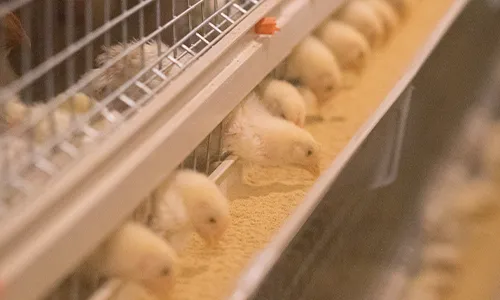
A chick brooder cage is a controlled cage system designed for raising chicks from day-old through the early rearing stage. Big Herdsman describes it as a compact system that integrates brooder heat, feeding, drinking, and hygiene control so chicks can grow in a more stable environment than in traditional unmanaged floor setups.
In practical poultry farming, the brooder cage is not just a warm box. It is part of a full management system. A good cage d'élevage de poussins helps keep chicks evenly distributed, reduces stress and competition, and makes daily inspection easier for commercial farms.
University of Georgia Extension notes that the goal of brooding is to provide a comfortable and healthy environment for growing birds, and that poor control of temperature, air quality, humidity, and light can reduce growth, worsen feed conversion, and increase disease and mortality.
That is why early brooding has such a large business impact. If chicks start weak, the flock becomes harder to manage later. Big Herdsman’s chick-rearing content also stresses that the first few weeks of life directly affect long-term productivity, which is why serious buyers treat brooding equipment as an investment rather than a temporary low-cost fix.
A modern brooder cage system usually includes the cage frame, brooder heat source, feeding system, drinking system, ventilation support, and waste-handling design. Big Herdsman’s chick brooder guide specifically describes integrated brooder, feed, and water systems as the core of a stable chick-rearing process.
This is why many buyers no longer search only for a cage. They search for matériel d'aviculture that works as one coordinated system. When the brooder, feed line, drinkers, and airflow are planned together, the rearing stage becomes more predictable and easier to scale.
| Composant | Fonction principale |
|---|---|
| Brooder unit | Provides stable heat for young chicks |
| Structure de la cage | Organizes chicks and supports daily management |
| Système d'alimentation | Distribue les aliments de manière constante |
| Système d'abreuvement | Supplies clean water with less waste |
| Ventilation support | Helps control air quality and moisture |
| Waste management | Keeps the rearing area cleaner |
The table above reflects the main functional elements described in Big Herdsman’s brooder-cage content and extension guidance on brooding environment control.
A good brooder cage helps chicks stay more evenly distributed and gives them steadier access to heat, feed, and water. Big Herdsman states that a well-designed system reduces stress and competition and improves early growth performance.
That matters because pullet quality affects later production. University of Kentucky Extension says the quality of the pullet flock has a direct effect on subsequent egg production and that body weight and uniformity are two of the most important quality factors in replacement pullets. A strong système de cages à poulettes therefore begins with stronger brooding management.
Commercial farms prefer cage brooding when they need cleaner management, better space use, and lower labor pressure. Big Herdsman’s chick brooder article highlights improved survival, better feed conversion, reduced disease transmission, and stronger flock uniformity as key reasons farms upgrade from outdated brooding setups.
A floor-based chick area can still work in some systems, but weak layout, poor temperature control, and uneven feed and water access create avoidable losses. For buyers involved in production de volaille, a brooder cage often becomes the first step toward a more standardized, scalable house design.
Buyers should look at heat control, air movement, water-line design, feed access, cage durability, cleaning convenience, and future integration with rearing systems. Big Herdsman’s content also emphasizes corrosion resistance and practical service life in humid poultry-house environments.
The keyword is not just “for sale.” It is fit for the project. A brooder cage for a medium farm, a breeding company, and an integrated poultry enterprise may need different tier layouts and automation levels. That is why many B2B buyers ask for layout planning together with the equipment quotation.
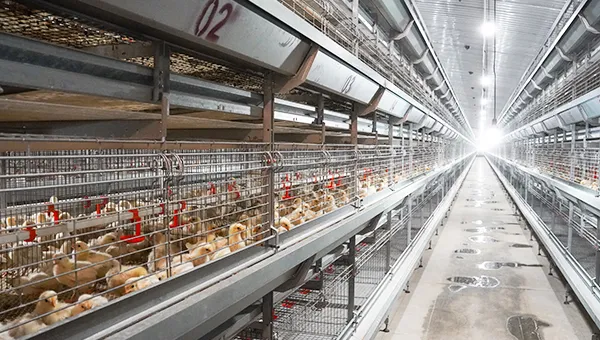
Ventilation is critical in brooding because chicks need warmth without stale air, wet conditions, or gas buildup. Purdue Extension notes that good ventilation is essential with all brooding systems, while UGA emphasizes that air quality and humidity are core factors in chick development.
In commercial projects, this means brooder performance depends heavily on Contrôle de l'environnement, not only on the cage itself. When heat, air movement, and moisture management are planned together, chicks grow more evenly and the brooding house becomes easier to manage.
A brooder cage starts with chicks, but its business value extends into the pullet stage. Big Herdsman’s pullet pages position rearing systems as the foundation for healthier layer development and higher future egg production.
That means brooding should not be viewed as a separate isolated stage. It is the beginning of the farm’s future performance curve. If the goal is stronger pullets and more stable later production, the brooding stage deserves the same planning discipline as the laying stage.
Long-term cost is reduced when farms choose equipment that lowers mortality, improves feed use, simplifies cleaning, and supports later flock uniformity. Big Herdsman also states that customized solutions can include planning, installation, and long-term technical support, which helps reduce operating friction after purchase.
This is why many buyers compare systems rather than unit price alone. A cheaper cage that creates weak airflow, difficult cleaning, or poor feed access may cost more over time than a better-designed system with stronger management value.
The supplier matters because poultry farms are operating systems, not single products. Big Herdsman presents its brooder-cage offering as part of a broader solution that includes farm planning, equipment manufacturing, installation, commissioning, and technical support.
For overseas buyers, that support model matters. Companies building or upgrading commercial houses usually want a partner who understands the full chain of matériel d'élevage de volailles rather than a seller who only quotes a cage.
A chick brooder cage is a controlled cage system for raising baby chicks with heat, feed, water, and hygiene support in one managed structure.
Because poor brooding conditions can reduce growth, worsen feed conversion, and increase mortality in the earliest stage of development.
Indirectly, yes. Strong early rearing improves pullet quality, and pullet quality affects later laying performance.
Look for heat control, ventilation, feed and water design, cage durability, cleaning convenience, and project-fit layout planning.
Yes. Big Herdsman’s content specifically positions them for commercial poultry projects that need better uniformity, hygiene, and management efficiency.
 English English
  Spanish
 French
 Russian
 Portuguese
 Arabic
 Chinese
 German
 Italian
 Japanese
 Korean
 Turkish
 Vietnamese
 Thai
Thai
 Dutch
Dutch
 Polish
 Indonesian
 Hindi
Hindi
 Bengali
 Urdu
Urdu