Le monde réel
Le monde réel
La collecte manuelle des œufs entraîne des cassures, un gaspillage de main-d'œuvre et une qualité d'œufs inégale. À mesure que les élevages avicoles prennent de l'ampleur, ces problèmes s'aggravent rapidement et réduisent les bénéfices. Un système moderne de collecte des œufs en interne résout ces problèmes en automatisant la manutention des œufs, en améliorant l'efficacité et en préservant la qualité des œufs tout au long du processus de collecte.
Un système interne de collecte des œufs Il s'agit d'un système de collecte automatisé utilisé dans les élevages avicoles pour récupérer les œufs dans les nids ou les cages à l'aide de tapis à œufs, de plateaux, d'élévateurs et de convoyeurs. Il permet d'améliorer la qualité des œufs, de réduire les coûts de main-d'œuvre, de limiter au maximum les œufs cassés et de favoriser une gestion efficace du cheptel reproducteur ainsi que la production d'œufs.
Un système de collecte des œufs est une solution mécanique conçue pour automatiser le processus de ramassage des œufs à l'intérieur des poulaillers. Au lieu que les ouvriers transportent les œufs manuellement dans des paniers ou des plateaux, ceux-ci sont acheminés automatiquement par des bandes transporteuses.
Dans un élevage avicole moderne, le système de collecte achemine les œufs depuis le nid ou la cage directement vers une zone centrale de conditionnement ou de stockage des œufs.
Une collecte efficace des œufs est essentielle pour garantir une qualité optimale des œufs et réduire les pertes.
Si les œufs restent trop longtemps dans le nid ou sur les bandes de fixation de la cage, les élevages peuvent être confrontés aux problèmes suivants :
Dans les élevages de reproducteurs, une mauvaise manipulation des œufs a une incidence directe sur la qualité des poussins et les performances du couvoir.
Avantages d'un prélèvement d'ovocytes réalisé dans les règles de l'art
Un système fiable permet aux exploitations avicoles de ramasser les œufs rapidement tout en respectant les normes d'hygiène.
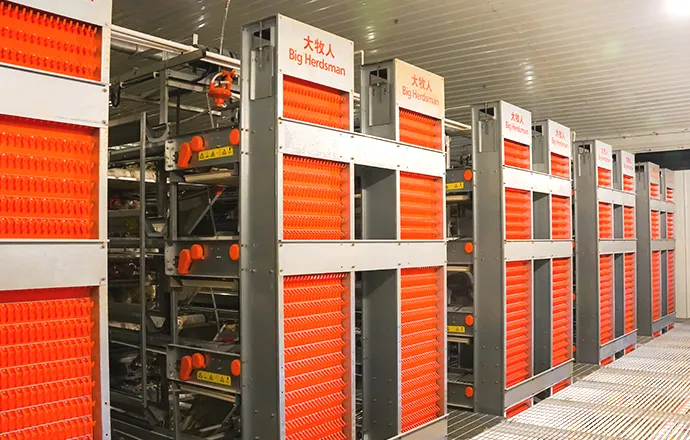
Un système de collecte automatique des œufs utilise des systèmes mécaniques synchronisés pour acheminer les œufs en douceur depuis la zone de nidification vers un point de collecte central.
Processus de recouvrement de base
Certains grands poulaillers utilisent deux tapis à œufs afin d'améliorer leur capacité de collecte.
Le système est conçu pour manipuler les œufs avec délicatesse et réduire le risque de fissures ou de dommages.
Une manipulation adéquate des œufs est essentielle pour préserver leur qualité.
Lorsque les exploitations agricoles utilisent des méthodes de collecte inadaptées, les œufs peuvent se salir, se fissurer ou être contaminés pendant le transport.
Une bonne manipulation des œufs permet d'améliorer :
Les systèmes automatisés limitent les manipulations manuelles et contribuent à garantir la propreté des œufs.
Cela revêt une importance particulière dans les élevages de reproducteurs, où la qualité des œufs à couver influe directement sur les performances d'incubation.
Une bonne gestion des reproducteurs a une influence directe sur le taux d'éclosion et les performances des poussins.
Les œufs mal conservés ou mal manipulés peuvent perdre leur fertilité et réduire le taux de réussite de l'incubation.
Facteurs importants liés à la gestion des éleveurs
Le processus d'élevage en couveuse dépend fortement de la qualité des œufs collectés au début de la production.
Grand berger Ces systèmes aident les exploitations agricoles à améliorer la gestion de leur cheptel reproducteur grâce à une automatisation efficace et à un calendrier de collecte régulier.

Le respect des bonnes pratiques permet aux exploitations agricoles de maintenir une production stable et de réduire les pertes.
Pratiques recommandées
Les exploitations agricoles devraient également surveiller :
Ces petits détails peuvent améliorer considérablement les résultats de production quotidiens.
Choisir le bon système de collecte d'œufs Cela dépend de plusieurs facteurs opérationnels.
Liste de contrôle pour la sélection
Questions importantes
Chez Big Herdsman, nous adaptons chaque système aux conditions locales, aux objectifs de production et aux exigences de gestion.

Big Herdsman Machinery Co., Ltd. est bien plus qu'un simple fournisseur d'équipements avicoles. Nous sommes un fournisseur de solutions complètes.
Nos atouts
Nos systèmes sont conçus pour améliorer :
Nous aidons les élevages avicoles à mettre en place des pratiques d'exploitation plus intelligentes et plus durables.
Il s'agit d'un système automatisé utilisé dans les élevages avicoles pour ramasser et acheminer les œufs depuis les nids ou les cages vers une zone de collecte centrale.
Le système achemine les œufs en douceur grâce à des bandes transporteuses et des convoyeurs, ce qui réduit la manutention manuelle et les dommages dus aux chocs.
Une conception adéquate des pondoirs permet de réduire le nombre d'œufs tombés au sol, d'améliorer l'hygiène et de préserver la qualité des œufs.
Les tapis à œufs acheminent les œufs en douceur de la zone de ponte jusqu'au point de collecte.
Une bonne gestion des reproducteurs permet d'améliorer la qualité des œufs, les conditions de stockage et le taux de réussite de l'incubation.
Oui. Les systèmes modernes peuvent être adaptés à différentes configurations de poulaillers et à différentes capacités de production.
 English English
  Spanish
 French
 Russian
 Portuguese
 Arabic
 Chinese