
Le monde réel
Le monde réel
High labor costs, unstable house climate, feed waste, egg breakage, and poor hygiene can quickly reduce poultry farm profitability. For modern commercial farms, basic tools are no longer enough. The right équipements pour la volaille helps farms improve automation, bird welfare, productivity, and long-term operating stability.
Poultry equipment includes cage systems, feeding systems, drinking systems, ventilation equipment, egg collection systems, manure removal systems, climate control systems, and smart farm management tools. When these systems work together, poultry farms can reduce labor, improve production efficiency, and create a cleaner, more stable poultry house environment.
Poultry equipment refers to the systems and machines used to raise poultry efficiently in commercial farms. It covers everything inside the poultry house, from feeding and drinking to egg handling, manure removal, ventilation, lighting, and climate control.
For small farms, simple equipment may be enough. But for medium and large commercial poultry farms, equipment must be planned as a complete system. A cage system that does not match the egg conveyor, or a ventilation system that does not match the house layout, can create long-term operation problems.
That is why many farm owners and project buyers now prefer working with a system-level manufacturer such as Grand berger, which provides integrated poultry farming solutions for different farm layouts, climates, and production targets.
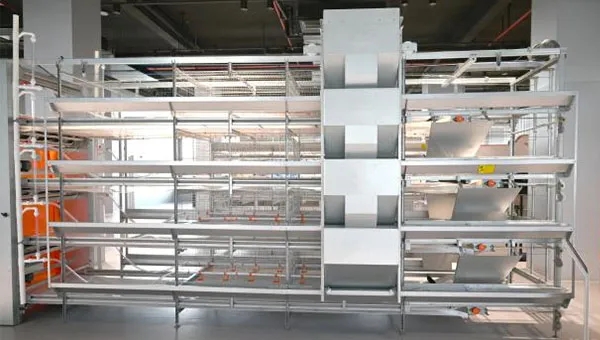
Modern poultry farming is a production system. Every part affects the final result. Feeding affects growth and egg output. Drinking affects bird health. Ventilation affects comfort and disease risk. Egg collection affects breakage rate. Manure removal affects hygiene and air quality.
A well-planned poultry equipment system helps farms:
| Défi agricole | Equipment Solution |
|---|---|
| Coût élevé de la main-d'œuvre | Alimentation automatique, collecte des œufs et évacuation du fumier |
| Poor air quality | Fans, air inlets, cooling pads, and controllers |
| Casse d'œufs | Gentle egg conveyor and collection systems |
| Déchets alimentaires | Systèmes d'alimentation automatique |
| Wet or dirty house conditions | Manure belts and conveyor systems |
| Unstable production | Integrated climate and equipment control |
For farms planning new poultry houses or upgrading existing facilities, systèmes complets de production de volailles provide a practical foundation for matching equipment with bird type, house design, and automation level.
A complete poultry farm usually needs several types of equipment working together. These systems should not be treated as separate purchases. They should be planned according to the farm’s production goal.
Common poultry equipment includes:
For commercial buyers, the key question is not only “What equipment do I need?” The better question is: “How can these systems work together inside my poultry house?”
Cage systems are widely used in commercial poultry farms because they help organize birds, improve space utilization, and support automated feeding, drinking, egg collection, and manure removal.
For egg production farms, a modern système de cages à étages helps improve stocking efficiency while supporting automatic egg collection, manure cleaning, and climate control. This makes daily management more consistent and reduces manual workload.
For breeder projects, a cage d'élevage de poules pondeuses supports better bird grouping, stable egg collection, adjustable drinking lines, and climate monitoring. This type of cage system is especially useful when farms need reliable fertilized egg production and careful bird management.
A cage system should always be selected together with the house layout, feeding route, drinking line design, egg collection direction, manure removal route, and ventilation plan.

Feeding equipment directly affects bird performance and farm costs. Feed is one of the largest operating expenses in poultry farming, so uneven feeding or feed waste can create serious losses over time.
Modern feeding systems can include feed silos, feed delivery lines, automatic feeders, troughs, and control devices. These systems help distribute feed more evenly and reduce manual feeding work.
Good feeding equipment helps farms:
| Bénéfice | Practical Value |
|---|---|
| Even feed distribution | More consistent flock performance |
| Lower feed waste | Better cost control |
| Reduced manual work | Lower labor pressure |
| Stable feeding schedule | Easier farm management |
For commercial poultry farms, feeding equipment should match bird age, production type, house size, and automation goals.
Clean water is essential for poultry health. A poor drinking system can lead to wet litter, higher humidity, water waste, and hygiene problems.
Modern drinking systems usually use nipple drinking lines because they provide cleaner water and help reduce unnecessary moisture inside the poultry house. A good drinking system should offer stable water pressure, easy adjustment, and reliable access for birds at different stages.
In commercial poultry equipment planning, the drinking system should be designed together with the cage or floor system. Water line height, pressure, filtration, and maintenance access all affect daily operation.
Stable water supply supports better bird comfort, stronger growth, and more consistent production results.
Egg collection is one of the most important parts of commercial egg production. Manual egg collection requires more workers, takes more time, and increases the risk of cracked or dirty eggs.
Un moderne système de collecte d'œufs helps move eggs smoothly from cages or nests to a central collection area. This reduces repeated handling and improves overall productivity.
For larger farms, an convoyeur d'œufs can help transport eggs across the poultry house more efficiently. A good conveyor system should move eggs gently, reduce breakage, and fit the farm’s layout.
Automatic egg collection helps farms improve:
For B2B buyers, egg collection equipment is not only about convenience. It directly affects saleable egg rate and daily farm output.
Manure management is closely connected with hygiene, air quality, odor control, and bird health. If manure stays too long inside the poultry house, ammonia levels and moisture can increase quickly.
Modern poultry farms often use manure belts, cross conveyors, and outside conveyor systems to move waste away from production areas. A well-designed manure conveyor system helps keep poultry houses cleaner and reduces manual cleaning pressure.
For farms with longer houses or more complex layouts, an convoyeur à fumier extérieur can move manure to storage or treatment areas more efficiently.
Manure removal should be planned together with ventilation. When these two systems work well together, the poultry house becomes easier to manage and healthier for birds.

Climate control is one of the most important parts of poultry equipment. Temperature, humidity, airflow, lighting, and air quality all affect bird comfort and production performance.
Un complet solution de contrôle de l'environnement may include fans, cooling pads, heaters, controllers, air inlets, curtains, lighting systems, and panel doors.
In hot regions, farms often need stronger ventilation and cooling capacity. In colder regions, insulation, heating, and controlled air exchange become more important. A good system should match local climate instead of using the same design everywhere.
A porte à panneaux can also support better sealing, insulation, and airflow control inside poultry houses. When used with fans, cooling pads, and controllers, it helps the environment control system perform more efficiently.
Broiler farms need equipment that supports fast growth, stable feeding, clean water access, good ventilation, and easy house management.
Broiler equipment may include floor rearing systems, broiler cage systems, automatic feeding lines, drinking systems, ventilation equipment, cooling pads, lighting, and manure handling systems.
For farms focused on broiler production, broiler cage systems can help improve space use, organize bird management, and support automation. The correct system depends on house size, target capacity, labor availability, and climate conditions.
Broiler equipment should be selected with attention to growth uniformity, bird comfort, cleaning efficiency, and long-term operating cost.
Layer farms require a more complete equipment system because egg production depends on housing, feeding, drinking, egg collection, manure removal, lighting, and environment control.
Un complet egg production system may include layer cages, pullet cages, breeder cages, egg conveyors, manure belts, feeding systems, drinking lines, lighting equipment, and climate control systems.
For commercial layer farms, equipment planning should focus on:
| Area | Key Question |
|---|---|
| Disposition de la cage | Does it match bird capacity and house size? |
| Collecte d'œufs | Can eggs move smoothly with low breakage? |
| Enlèvement du fumier | Can waste be removed regularly? |
| Ventilation | Can airflow reach all areas evenly? |
| S'alimenter et boire | Can birds access feed and water consistently? |
| Maintenance | Can workers inspect and service equipment easily? |
A good layer farm is not built by one product. It is built by a complete system.
Smart poultry equipment helps farms reduce repetitive work and improve daily consistency. Automation is especially important for large farms because small manual mistakes can create large losses at scale.
Smart poultry systems may include:
The goal of automation is not only to reduce workers. It also helps improve timing, accuracy, and consistency. When equipment runs according to set parameters, farm managers can focus more on inspection, bird health, and production planning.
For project buyers, automation should be planned from the beginning, not added after the farm is already built.
Choosing poultry equipment should begin with farm planning. Price matters, but the cheapest equipment is not always the most cost-effective over time.
Before choosing equipment, buyers should confirm:
| Planning Factor | Pourquoi est-ce important ? |
|---|---|
| Bird type | Determines cage, feeding, and house design |
| Production goal | Affects egg, broiler, or breeder equipment selection |
| House size | Determines layout and equipment quantity |
| Conditions climatiques | Affects ventilation, cooling, and heating needs |
| Labor availability | Détermine le niveau d'automatisation |
| Expansion plan | A un impact sur l'évolutivité du système |
| Service requirements | Affects installation and long-term operation |
A reliable supplier should ask about these details before recommending equipment. This is the difference between selling products and designing a farm system.
A poultry farm project involves many connected parts. If cages, conveyors, feeding systems, drinking systems, and climate control are supplied without coordination, the farm may face installation conflicts and operational problems.
A system-level manufacturer can help connect:
Big Herdsman focuses on complete poultry farming systems, combining product development, system design, manufacturing, installation support, and service. For overseas B2B buyers, this helps reduce communication costs and improve project reliability.
Farm owners, agricultural project investors, engineering contractors, and equipment distributors can contact L'équipe chargée des équipements avicoles chez Big Herdsman to discuss customized poultry equipment solutions.
Poultry equipment includes the systems and machines used in poultry farms, such as cages, feeding systems, drinking systems, egg collection systems, manure conveyors, ventilation equipment, cooling pads, heaters, controllers, and lighting systems.
A poultry farm usually needs housing equipment, feeding equipment, drinking systems, ventilation equipment, climate control systems, manure removal systems, and, for egg farms, egg collection equipment.
Automatic poultry equipment reduces manual work, improves consistency, lowers handling errors, supports cleaner farm operation, and helps commercial farms manage larger production capacity.
You should consider bird type, production goal, house size, climate conditions, automation level, labor availability, and future expansion plans before choosing equipment.
Egg production farms usually need layer cages, feeding systems, drinking lines, egg collection systems, egg conveyors, manure removal systems, ventilation equipment, lighting, and climate controllers.
Yes. Poultry equipment can be customized according to farm layout, climate, bird type, capacity, automation level, and production goals.
Poultry equipment is the foundation of modern commercial poultry farming. The right equipment helps farms improve productivity, reduce labor, protect bird welfare, manage hygiene, and create a stable poultry house environment.
For poultry farms planning new projects or upgrading existing houses, equipment should be designed as a complete system. Cage systems, feeding, drinking, egg collection, manure removal, ventilation, and climate control must work together.
Big Herdsman provides integrated poultry equipment and customized farm system solutions for global B2B buyers, helping poultry farms build efficient, automated, and scalable production systems.
 English English
  Spanish
 French
 Russian
 Portuguese
 Arabic
 Chinese
