
Le monde réel
Le monde réel
Poor bedding quietly hurts poultry performance. Wet litter, slippery paper, mold, and harsh wood products can turn a healthy house into a source of dirty eggs, weak legs, footpad problems, and extra labor. The good news is simple: better bedding choices solve many of these problems early.
The materials you should pas use for chicken bedding include cedar, treated wood shavings, flat newspaper as the main floor surface for chicks, and any bedding that is wet, moldy, compacted, or overly dusty. In modern poultry farming, good bedding must stay dry, absorb moisture, support bird movement, and fit the whole house management system.
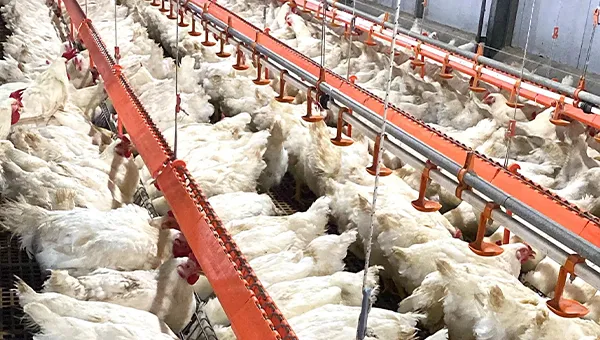
In commercial poultry houses, bedding is never just something birds stand on. It affects bird comfort, house hygiene, labor cost, ammonia level, egg cleanliness, and daily management efficiency. For companies involved in production de volaille, bedding quality directly affects how stable the whole operation feels from day to day.
From a manufacturer’s point of view, poor bedding often creates hidden costs. A house with bad litter usually needs more cleaning, more correction work, and more flock monitoring. For overseas B2B buyers, that means more labor pressure and less predictable output. That is why serious poultry farms do not treat bedding as a cheap afterthought.
The first materials to avoid are easy to remember: anything toxic, chemically treated, slippery, wet, or contaminated. That includes cedar, treated wood shavings, slick newspaper, moldy litter, caked bedding, and dusty material that reduces air quality.
Cheap materials may look attractive at first, but poor bedding usually becomes expensive later. It can increase disease risk, reduce bird comfort, and make the house much harder to manage. This is especially true in large-scale houses where litter problems spread fast and affect the full operating rhythm of the farm.
Cedar should not be used for chicken bedding. Treated wood shavings should also be avoided. In both cases, the concern is safety and suitability. Poultry houses need bedding that is stable, clean, and bird-friendly, not material with added chemicals or strong aromatic properties.
For commercial farms, this point matters even more. A modern farm needs repeatable, standardized house conditions. Once bedding materials vary too much from batch to batch, the whole management process becomes harder to control. That is why many professional farms prefer consistent supply and stable specifications rather than whatever low-cost material happens to be available locally.
Flat newspaper is a poor main bedding material for chicks because it is slippery. Young birds need traction. When they cannot grip the surface properly, early movement becomes difficult, and leg development problems are more likely.
This may sound like a small issue, but small issues become big losses in commercial production. If chicks struggle to stand, move, reach feed, or reach water, the whole flock becomes less uniform. In projects that use élevage de poulets de chair au sol, floor quality is one of the first things that shapes daily performance.
Wet litter is one of the clearest signs of poor bedding management. It creates dirty birds, dirty eggs, and poor house conditions. Moldy litter adds hygiene risk. Dusty bedding brings another kind of problem: poor air quality.
A poultry house should not be too wet, but it should not be too dusty either. Good litter stays loose and manageable. Once bedding becomes damp and sticky or dry and powdery, the house begins to work against the flock instead of supporting it. That is when labor increases and bird performance often starts to slip.
Yes. Very fine litter can compact too easily, trap moisture in the wrong way, or create too much dust in the house. Poor-quality sawdust can also break down too fast under real farm conditions, especially when stocking density is high.
For commercial operators, the right bedding should do four jobs well:
If a material fails on one of those points, it rarely performs well over a full production cycle.
Bedding does not work alone. It always works together with drinkers, manure removal, airflow, and temperature control. If drinker lines leak, if manure is not handled well, or if ventilation is weak, even decent bedding will fail.
That is why a complete poultry house must be viewed as a system. Good litter management depends heavily on Contrôle de l'environnement, because temperature, humidity, and airflow decide whether bedding stays dry and usable. A farm can buy better bedding, but if the house climate is unstable, the same problem will return again.
In many poultry applications, dry and absorbent materials such as pine shavings or suitable straw are preferred when they can be kept clean and well managed. The exact best choice depends on climate, flock density, production type, and local material supply.
A broiler house, a breeder floor house, and an egg production project do not all use bedding in the same way. That is why the best bedding strategy should match the real operating conditions of the farm, not just general advice copied from small backyard systems.
| Material or condition | Why it is a bad choice |
|---|---|
| Cedar | Poor choice for poultry bedding |
| Treated wood shavings | May contain unsuitable chemical treatment |
| Flat newspaper | Slippery for chicks |
| Wet litter | Promotes dirt, poor hygiene, and caking |
| Moldy litter | Raises sanitation and health concerns |
| Dusty litter | Harms air quality and bird comfort |
Engineering contractors and agricultural technology service companies should include bedding in the original house planning stage. It should never be left to last-minute purchasing decisions. The right questions include:
These questions help buyers avoid short-term choices that create long-term trouble. Corporate customers want systems that stay stable, not systems that need constant correction.

Because bedding problems are often not just bedding problems. They are house-system problems. A supplier that understands feeders, drinkers, ventilation, manure handling, and house layout can usually identify the real cause faster and propose better solutions.
That is why many buyers prefer working with an experienced supplier of matériel d'élevage de volailles instead of buying isolated components from different sources. For long-term poultry production, stable system thinking always creates more value than one-off product decisions.
It is better not to. Cedar is not considered a good bedding choice for poultry because commercial farms need safer and more stable bedding materials.
Not as the main surface for chicks. It is too slippery and does not provide the traction young birds need.
Wet litter creates dirty house conditions, increases labor, and makes it harder to keep birds healthy and productive.
Dry, absorbent, stable bedding that supports good footing and can be managed easily under farm conditions is usually the better choice.
Yes. Poor litter often leads to dirtier birds, dirtier nests, and more dirty eggs.
Absolutely. Bedding should be planned together with drinkers, manure removal, and ventilation from the start.
 English English
  Spanish
 French
 Russian
 Portuguese
 Arabic
 Chinese