Commercial egg farms need more than simple cages to remain competitive. Labor pressure, egg breakage, poor airflow, and difficult manure management can reduce farm efficiency over time. A modern layer cage system helps poultry farms improve egg production workflow, space utilization, hygiene, and automation.
A layer cage system combines poultry cages, feeding systems, drinking lines, egg collection, manure removal, ventilation, and climate control into one integrated production structure. It supports cleaner management, lower labor intensity, and more organized commercial egg production.
What Is a Layer Cage System?
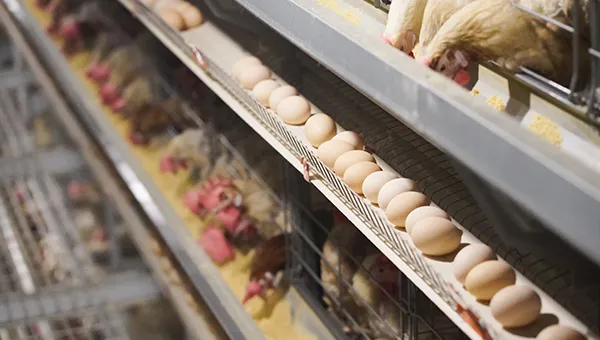
A layer cage system is a structured poultry housing solution designed for commercial egg-laying hens. Instead of birds moving freely on the floor, hens are organized in cage rows connected to feeding, drinking, egg collection, and manure removal systems.
Modern layer cage systems support:
- Automatic feeding
- Nipple drinking systems
- Egg collection
- Manure removal
- Climate control
- Lighting management
For large commercial poultry farms, integrated systems improve operational consistency and simplify daily management.
Why Commercial Farms Use Layer Cage Systems
As poultry farms expand, manual management becomes more difficult. Layer cage systems help farms organize production more efficiently.
Main advantages include:
| Farm Need |
Cage System Benefit |
| Higher bird capacity |
Better space utilization |
| Reduced labor |
Supports automation |
| Cleaner eggs |
Better egg handling |
| Easier management |
Structured cage layout |
| Improved hygiene |
Integrated manure removal |
| Stable production |
Better environmental control |
For commercial egg farms, the goal is not only more cages. The goal is a more organized production system.
Main Components of a Layer Cage System
A complete layer cage system includes several connected parts.
Common equipment includes:
- Layer cages
- Feeding systems
- Drinking systems
- Egg collection systems
- Egg conveyors
- Manure removal systems
- Ventilation equipment
- Cooling pads
- Environmental controllers
- Lighting systems
Each system affects the others, so planning should be done together rather than separately.
Automatic Egg Collection in Layer Cage Systems
Egg collection is one of the most important functions inside a layer cage system.
An egg collection system helps move eggs smoothly from cage rows to collection points, reducing manual handling and breakage risk.
For larger poultry houses, an egg conveyor supports centralized egg transport between houses and packing areas.
Automatic egg collection helps farms:
- Reduce labor pressure
- Improve collection speed
- Lower egg damage
- Improve workflow organization
- Support larger production capacity
Feeding and Drinking Systems for Layer Farms
Stable feeding and drinking access are critical for consistent egg production.
A modern layer cage system usually includes automatic feed delivery and nipple drinking systems. These systems help maintain cleaner conditions while reducing feed waste and water leakage.
Good feeding and drinking systems support:
- Better flock uniformity
- Stable production rhythm
- Reduced labor
- Cleaner poultry house conditions
Drinking line height and feed distribution should match bird age and cage design.
Manure Removal and Poultry House Hygiene
Clean poultry house conditions are essential for long-term egg production.
Modern manure handling systems help remove waste more regularly, improving air quality and reducing ammonia buildup.
An outside manure conveyor helps transport manure outside the poultry house for storage or treatment.
Better manure management supports:
- Cleaner air
- Lower odor pressure
- Easier house maintenance
- Better worker conditions
- Improved egg hygiene
Ventilation and Climate Control in Layer Cage Systems
Layer hens perform best in stable environments. Poor airflow and heat stress can reduce egg production and increase management difficulty.
A modern environment control system helps regulate:
- Temperature
- Airflow
- Humidity
- Lighting
- Cooling and heating
A panel door also supports airflow management and insulation performance inside poultry houses.
A-Type vs H-Type Layer Cage Systems
Different cage structures are suitable for different poultry projects.
A-Type Cage Systems
- Lower investment cost
- Simpler structure
- Suitable for medium-scale farms
- Easier installation
H-Type Cage Systems
- Higher automation potential
- Better space utilization
- Suitable for large commercial farms
- Easier centralized management
The best choice depends on farm scale, budget, labor conditions, and future expansion plans.
Smart Automation in Layer Farms
Modern layer cage systems increasingly use automation to improve operational consistency.
Automation can support:
- Feeding schedules
- Egg collection timing
- Climate control
- Lighting programs
- Alarm systems
- Production monitoring
For large poultry farms, automation reduces repetitive work and improves management efficiency.
How to Choose a Layer Cage System
Before selecting equipment, farms should evaluate:
| Planning Point |
Why It Matters |
| Bird quantity |
Determines cage capacity |
| House dimensions |
Affects layout design |
| Local climate |
Determines cooling and ventilation needs |
| Labor availability |
Affects automation level |
| Expansion plans |
Affects scalability |
| Egg collection workflow |
Affects conveyor routing |
A professional supplier should design the system according to actual farm conditions rather than offering a standard layout for every project.
Frequently Asked Questions
What is a layer cage system?
A layer cage system is a structured poultry housing system designed for commercial egg-laying hens with integrated feeding, drinking, egg collection, manure removal, and climate control.
What are the benefits of a layer cage system?
Benefits include better space utilization, lower labor demand, improved egg handling, cleaner management, and stronger automation support.
What is the difference between A-type and H-type layer cages?
A-type cages are simpler and lower-cost, while H-type cages support higher automation and larger commercial poultry projects.
Why is automatic egg collection important?
Automatic egg collection reduces manual handling, improves collection speed, and lowers egg breakage risk.
Can layer cage systems be customized?
Yes. Systems can be customized according to house size, flock capacity, climate conditions, and automation goals.
Why should ventilation and manure removal be planned together with cages?
Because air quality, hygiene, and bird comfort directly affect egg production and farm efficiency.
Big Herdsman layer cage
 English
  Spanish
 French
 Russian
 Portuguese
 Arabic
 Chinese
 German
 Italian
 Japanese
 Korean
 Turkish
 Vietnamese
 Thai
Thai
 Dutch
Dutch
 Polish
 Indonesian
 Hindi
Hindi
 Bengali
 Urdu
Urdu